As an Amazon Associate, we earn from qualifying purchases. Some links on this site are affiliate links at no extra cost to you. Our recommendations are based on thorough research and editorial judgment.


Tips For Commercial Window Replacement?

For successful commercial window replacement, we should assess our current windows, noting age and condition. We need to evaluate energy efficiency options, prioritizing Low-E glass and double glazing for improved insulation. Aesthetically, consider modern designs and materials that match our brand identity, such as aluminum or fiberglass for durability. It’s essential to research local building codes for compliance and schedule regular maintenance to guarantee peak performance. Let’s explore these aspects further for thorough project success.
Key Takeaways
- Assess the condition of existing windows to determine if upgrades or replacements are necessary for efficiency and functionality.
- Prioritize energy-efficient options like Low-E glass and double glazing to reduce operational costs and improve insulation.
- Choose high-quality materials that align with aesthetic trends and provide durability, such as aluminum or fiberglass.
- Select a qualified installer with a solid track record in commercial projects to ensure proper installation and compliance with local codes.
- Maintain a regular inspection schedule to ensure long-term performance and address minor issues before they escalate.
Assess Your Current Windows
You may be interested


Assessing your current windows is vital for effective replacement planning. First, note the window age to determine potential lifespan and necessary upgrades.
Damage Assessment
We should inspect each frame for cracks, warping, or peeling paint, especially in wooden constructions. Assess joint stability and verify alignment to guarantee proper function.
Next, we’ll examine the glass for cracks or fogging, indicating seal failure. Checking seals and weather stripping for wear is essential to prevent air leaks.
Finally, we must test each window’s operation. Smooth opening and secure locking mechanisms are fundamental for safety. Documenting all findings—structural issues, seal failures, and functional problems—helps us create a thorough plan for replacement. With careful attention, we can guarantee more efficient and effective window replacements in the future. Additionally, consider the benefits of double or triple-pane glass which can significantly enhance insulation performance and energy efficiency.
Evaluate Energy Efficiency Options

When considering window replacement, we must prioritize energy efficiency to lower operational costs and improve comfort. We should explore various energy efficient technologies suited for our building’s specific climate.
Key features include:
- Low-E Glass: Reflects heat and UV light while allowing natural light.
- Double or Triple Glazing: Enhances insulation with inert gases for reduced heat loss.
- Smart Glass: Alters tint to manage solar heat gain dynamically.
To assess performance, we need to examine window performance metrics like U-factor and Solar Heat Gain Coefficient (SHGC). Windows with low U-factors show better insulation and lower heating costs. Our goal is to select windows that maximize energy savings while ensuring comfort and durability, ultimately impacting our bottom line positively. Additionally, understanding installation quality is crucial, as it directly correlates with achieving energy efficiency targets.
Consider Aesthetic Appeal
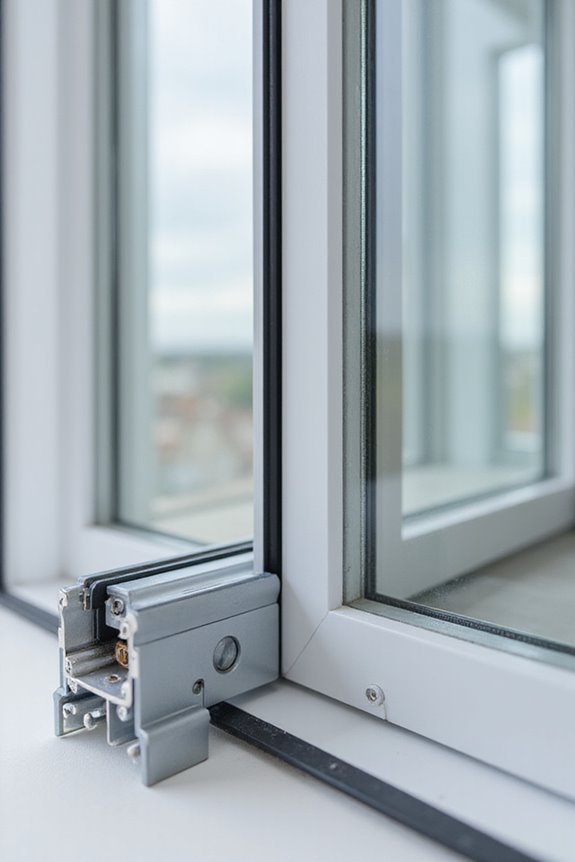
Aesthetic appeal plays a significant role in the decision-making process for commercial window replacement. We should explore modern design trends that elevate our brand identity. Upgrading windows can refresh our façades with sleek finishes, like black frames, and customizable options suited to our architectural styles.
- Custom Designs: Various sizes, grille patterns, and hardware choices let us match windows to our brand’s image.
- Visual Impact: Choosing elegant shapes and colors enhances our property’s visual coherence, reinforcing credibility and inviting clients. Additionally, incorporating high-quality materials ensures durability and longevity, which are critical for maintaining an attractive appearance over time.
Explore Material Choices

Choosing the right material for our commercial windows can considerably impact strength, insulation, and long-term maintenance costs. Here’s a breakdown of popular choices:
Aluminum
- Offers strength and durability, suitable for large glass panels.
- Corrosion-resistant with low maintenance, but consider thermal breaks for better insulation.
Fiberglass
- Combines aluminum-like strength with superior insulation properties.
- More environmentally friendly, but usually premium-priced.
Vinyl (PVC)
- Cost-effective with minimal maintenance.
- Multi-chambered profiles enhance insulation, though options for size and color may be limited.
Wood
- Excellent insulation and noise reduction, but requires regular upkeep to prevent rot.
- Price varies, often higher than vinyl.
Composite
- Delivers durability and thermal performance, requiring little maintenance.
- Often made from sustainable materials.
Understanding these material choices is essential for both sustainability considerations and material durability. Additionally, selecting options with Energy Star certification can significantly improve energy efficiency and cost savings over time.
Research Window Features

Energy Efficiency
- Low-E coatings, like Cardinal LowE 366, minimize heat transfer.
- Argon gas fills enhance thermal insulation.
- Consider triple-pane glass for superior insulation in diverse climates. Additionally, incorporating window seal kits can further improve indoor temperature control and reduce energy costs.
Glass Types
- Use tempered glass for durability in high-traffic areas.
- Acoustic noise suppression glass is essential for urban settings.
Frame Materials
- Multi-wall frames improve insulation and structural strength.
- Composite materials like Fibrex lower maintenance needs.
When we examine these features, we improve energy performance and comfort, ensuring our commercial spaces are up to standard.
Determine Installation Method
Determining the appropriate installation method is essential, as it can greatly influence the overall success of a commercial window replacement project. We have two main installation options: pocket (retrofit) replacement and full-frame replacement. A pocket replacement installs a new window within the existing frame, preserving structural elements, while a full-frame replacement completely removes the old frame and sash for a fresh start.
Each option has its replacement benefits. Pocket replacements are quicker and more cost-effective but limited by current frame dimensions. In contrast, full-frame replacements provide better design flexibility and address damaged frames more thoroughly, albeit requiring more labor. Ultimately, understanding these differences helps us choose the best method tailored to our project’s needs. Additionally, considering energy-efficient windows can significantly reduce heating and cooling costs in commercial spaces.
Set a Budget for Replacement
Setting a budget for window replacement is one of the first steps in our planning process, directly impacting choices and overall project viability. We need to take budget restraints into account alongside cost effectiveness when allocating funds.
Here’s a breakdown to help us stay on track:
- Average costs range from $500 to $2,000 per window, depending on size and materials.
- Consider installation costs, which typically add 15-30% to our total.
- If we’re opting for energy-efficient windows, the initial investment may be higher but saves us on energy expenses long-term.
- We should obtain multiple contractor quotes and plan for potential contingencies, including permit fees and unexpected damage.
Staying organized now helps us navigate this project smoothly and effectively.
Plan for Downtime and Disruption
Effective planning for downtime and disruption guarantees a smoother window replacement project. To achieve success, we need to take into account several key aspects:
Understand Project Timeline****
With product lead times extending to six months, our downtime planning must allow for potential delays. We should schedule installations outside normal hours to minimize disruption.
Coordinate with Occupants
Advance communication is critical. Letting everyone know about restricted areas and noise can ease tensions. We can arrange alternative workspace if necessary.
Mitigate Interruptions
Evaluating peak operational hours helps us avoid business downtime. Temporary protective barriers and HVAC adjustments will maintain comfort during the process.
Safety Compliance
We must adhere to OSHA regulations, ensuring safety for everyone involved. Establish a waste disposal plan that meets local standards. Effective disruption management involves foresight, clear planning, and ongoing communication.
Choose a Qualified Installer
Choosing a qualified installer for commercial window replacement is vital to secure durability and performance. We must confirm they’ve passed certification verification from reputable organizations like the WDMA and AAMA. These certifications often require a mastery of installation practices, guaranteeing adherence to industry standards.
Look for installers with substantial experience in commercial projects. Their track record should reflect familiarity with both the unique challenges of commercial buildings and a successful history with client satisfaction.
Qualified installers also prioritize using quality materials, apply proper flashing techniques, and comply with warranty requirements. Effective communication, transparent pricing, and strong post-installation support are essential. By considering these factors, we can feel confident in our choice of installer.
Review Local Building Codes
Before we proceed with the commercial window replacement, it is essential to understand local building codes that govern such projects. We’ll need to check whether a building permit is required, which is common for window replacements classified as alterations. This guarantees code compliance with safety, energy, and structural standards.
Here are key points to take into account:
- Permit Requirements: Many jurisdictions exempt same-for-same replacements if size and location remain unchanged.
- Safety Glazing: Regulations mandate compliant materials for hazardous locations like entrances and exits.
- Energy Efficiency: Windows must meet standards for air filtration and water penetration resistance.
Consider Long-Term Maintenance
Long-term maintenance of commercial windows is a key factor in guaranteeing their durability and performance. By implementing effective window longevity strategies, we can optimize our windows’ lifespan and functionality.
Maintenance Schedule Importance
Regular cleaning and inspections, at least seasonally, remove dirt and reveal damage early. This proactive approach helps in addressing minor issues before they escalate into costly repairs.
We must also check seals and weatherstripping for deterioration, as damaged seals lead to energy inefficiency. Additionally, inspecting hardware for rust and wear guarantees smooth operation and security.
Timely repairs of broken components safeguard against safety hazards and additional deterioration. By incorporating a thorough maintenance schedule, we greatly enhance our windows’ performance and lifespan, contributing to both comfort and energy efficiency.
Test Noise Reduction Capabilities
Testing the noise reduction capabilities of commercial windows is essential for evaluating their performance in noisy environments. We can utilize outdoor-indoor noise reduction (OINR) metrics to measure the effectiveness of these windows.
Key testing methods like loudspeaker simulations, align with ASTM standards, ensuring accuracy and reliability. Certification benefits come from independent noise testing, verifying manufacturers’ claims and boosting buyer confidence.
To maximize reliability, we should conduct multiple tests under controlled conditions, taking into account variables like wind and external noise. Measurements like the Sound Transmission Class (STC) rating, reflect how effectively a window blocks unwanted noise; higher ratings indicate superior soundproofing. By understanding these metrics, we can make informed choices for better acoustic performance in commercial spaces.
Maximize Natural Light Access
Maximizing natural light access in commercial spaces is an essential aspect of design that enhances energy efficiency and occupant comfort. To achieve daylight optimization, we recommend selecting high-performance glass with low-E coatings. These coatings allow visible light while minimizing heat gain, which is fundamental.
Utilizing insulated glass units (IGUs) combines multiple panes for better thermal insulation without sacrificing brightness. You can also consider architecturally large glass panels like floor-to-ceiling windows, as they flood interiors with natural light.
Additionally, positioning windows to face ideal sun exposure and incorporating features like clerestory windows can greatly benefit your space. Finally, using light-colored reflective finishes helps maximize light distribution, ensuring a well-lit and inviting environment.
Frequently Asked Questions
What Are the Most Common Window Styles for Commercial Buildings?
In commercial storefronts, we see casement and sliding windows creating striking aesthetics, while double hung and awning styles enhance ventilation. Each choice reflects our unique vision, blending functionality with beauty in our shared spaces.
How Long Does a Typical Window Replacement Project Take?
A typical window replacement project usually takes 8 to 16 weeks. We should consider project timelines and installation factors, like material availability and weather, to guarantee everything runs smoothly and meets our expectations.
What Warranties Are Available for New Commercial Windows?
Think of warranties as safety nets. For new commercial windows, we’ve got manufacturer, installation, and glass breakage warranties. Their durations can range widely, ensuring we’re covered through countless seasons, protecting our investment and peace of mind.
How Can I Ensure Proper Window Maintenance After Installation?
To guarantee proper window maintenance after installation, we should prioritize regular window cleaning and seal inspection. By creating a consistent schedule, we’ll maintain aesthetics and functionality, preventing small issues from leading to bigger problems down the road.
Are There Financing Options for Window Replacement Projects?
Absolutely, we’ve found various window financing options that help us budget projects effectively. From low-interest loans to home equity lines, these choices make it easier to invest in energy-efficient windows without breaking the bank.


