As an Amazon Associate, we earn from qualifying purchases. Some links on this site are affiliate links at no extra cost to you. Our recommendations are based on thorough research and editorial judgment.


Best Way To Window Sealing Techniques?

To effectively seal windows, we should consider a blend of techniques for ideal results. First, we can employ weatherstripping to address movable parts, using types like V-strip or tubular foam. For fixed parts, caulking is essential, choosing silicone or polyurethane for their durability. Expanding foam can fill larger gaps, enhancing insulation. Finally, window seal kits can provide added efficiency during winter months. If we explore further, we’ll uncover more on choosing the right materials for our projects.
Key Takeaways
- Use weatherstripping to block drafts around movable parts for effective air sealing.
- Apply caulking to seal small cracks in fixed areas, ensuring clean, dry surfaces.
- Consider expanding foam to fill larger gaps, but avoid overuse to prevent frame distortion.
- Implement window seal kits during winter months for robust energy efficiency solutions.
- Choose silicone or hybrid sealants for superior durability and flexibility in various weather conditions.
Common Window Air Sealing Techniques
You may be interested


When we consider air sealing for windows, it’s crucial to implement effective techniques that minimize drafts and enhance energy efficiency.
Weatherstripping
Using flexible weatherstripping around movable parts blocks drafts while allowing window operation. Types like V-strip and tubular foam are practical for various gaps.
Caulking
For fixed parts, caulk seals small cracks effectively. Cleaning the area guarantees proper adhesion, and using painter’s tape gives a neat finish.
Expanding Foam
Low-expanding foam fills larger gaps, creating an insulating air barrier, but caution is needed to avoid frame distortion. Additionally, window seal kits can provide a robust solution for improving overall energy efficiency during winter months.
Types of Window Sealants

As we explore the various types of window sealants, it becomes clear that each option has its own unique characteristics, performance attributes, and ideal applications.
Silicone Sealants
Silicone offers significant advantages, including excellent adhesion, flexibility, and durability. It’s ideal for exterior windows, handling extreme temperatures and UV exposure well. There are two types—acid-cure and neutral-cure—each suited for different materials.
Acrylic Latex Sealants
On the other hand, acrylic latex sealants have notable limitations. While easy to apply and paintable, they lack the weather resistance needed for outdoor use and may crack over time. Their effectiveness can be further challenged by environmental resistance, which determines durability over time.
Other Options
Polyurethane and butyl rubber sealants provide additional choices, blending strong adhesion and flexibility, but
Recommended Caulking Materials for Exterior Window Sealing
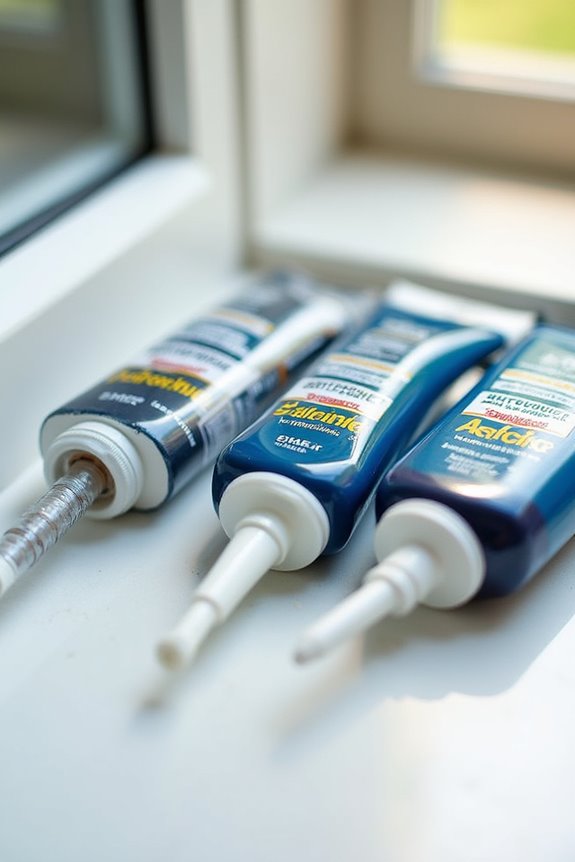
Choosing the right caulking materials for exterior window sealing is crucial for maintaining energy efficiency and waterproofing. For our projects, we often recommend silicone due to its remarkable flexibility and durability, making it ideal for temperature changes. Its quick curing time guarantees we achieve a reliable water-resistant seal in about 30 minutes. On the other hand, polyurethane offers excellent adhesion and toughness, suitable for regions facing mechanical stress. It’s more paintable, allowing us to match colors with window frames easily. For an enhanced option, hybrid caulks combine silicone benefits with polyurethane advantages, providing superior flexibility and moisture resistance. By understanding these materials, we can optimize both utility and aesthetics in our sealing efforts, guaranteeing lasting results. Furthermore, using low U-factors in conjunction with proper sealing techniques can significantly enhance energy efficiency in homes.
Types of Sealants by Application and Benefits
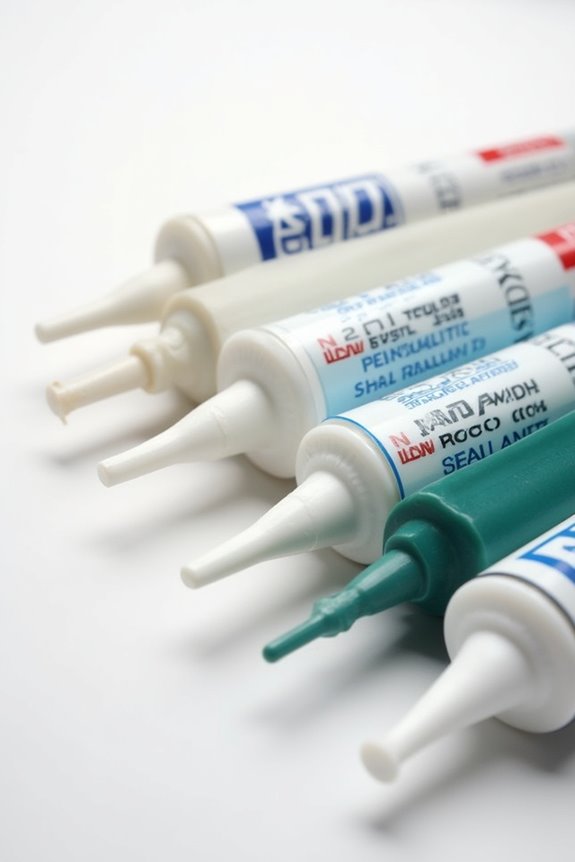
Understanding the various sealants available for window sealing is essential for selecting the most suitable option for specific needs.
Silicone Sealants are perfect for harsh weather conditions, offering flexibility and a lifespan over 20 years. However, their adhesion properties may require surface preparation.
Polyurethane Sealants provide strong adhesion and are paintable, ideal for both interior and exterior use. They resist mechanical stress well but are less flexible than silicone.
Acrylic Latex Sealants work for interior applications with easy cleanup but aren’t suitable for exteriors due to their lower durability.
Butyl Rubber Sealants excel in bonding dissimilar materials but remain tacky.
Hybrid Sealants combine the best features of silicone and polyurethane, with excellent adhesion properties and paintability, making them versatile for diverse applications. Additionally, choosing the right weatherstripping based on gap size compatibility can significantly enhance the effectiveness of these sealants.
Practical Window Sealing Techniques for Retrofits

When we undertake window retrofits, employing effective sealing techniques can notably enhance energy efficiency and comfort. A widely used approach includes retrofit strategies like inserting a backer rod into gaps between the window frame and rough opening, followed by applying caulk, which creates a reliable air barrier.
Using low-expansion spray foam around the frame fills irregular gaps and provides a moisture-resistant thermal barrier, while rubber gaskets and silicone caulk effectively seal high-insulation panels. It’s essential to integrate these sealing materials properly, ensuring airtightness with interior membranes and specialized tapes. This method maintains not just comfort but also optimizes energy savings, as even minor gaps can notably impact efficiency. Proper installation and sealing are critical for achieving the best results, particularly when focusing on energy efficiency considerations to improve overall performance.
Installation and Application Tips for Effective Window Sealing
Effective window sealing requires careful preparation and execution, building upon the practical techniques we’ve already explored. To start, we should focus on window preparation:
- Inspect edges for drafts, cracks, and gaps, marking potential leak points.
- Remove old sealant thoroughly to guarantee adhesion of new materials.
Next, for sealant application, we need to clean all surfaces with a mild cleanser, making certain they’re free of dust and grime.
- Dry the area completely to prevent moisture entrapment.
- Apply sealant evenly using a caulking gun, smoothing it to create a professional finish. Incorporating features like airtight seals can further enhance your insulation efforts, effectively blocking drafts and reducing heating bills.
Choosing the Right Sealant for Your Project
How do we select the right sealant for our window sealing projects?
Choosing a sealant involves considering the project’s requirements. For exterior windows, silicone is our top choice due to its durability, with a sealant lifespan exceeding 10 years, and strong UV resistance.
When working indoors, acrylic latex or polyurethane sealants are ideal, offering ease of application and paintability. Polyurethane provides excellent adhesion strength for diverse materials but typically lasts 5-10 years.
For specialized bonding, butyl rubber excels in joining dissimilar surfaces. If versatility is our goal, hybrid sealants balance flexibility and adhesion, suitable for both indoor and outdoor applications.
Frequently Asked Questions
How Often Should I Reseal My Windows?
When it comes to resealing our windows, it’s wise to keep an eye on them every 2-5 years for ideal energy efficiency. Regular residential maintenance saves us money and keeps our homes cozy and comfortable.
What Tools Do I Need for Window Sealing?
For window sealing, we’ll need essential tools like a measuring tape, utility knife, caulking gun, and weather stripping. Together, we can create a snug, draft-free space, ensuring our home stays cozy and energy-efficient.
Can I Remove Old Caulk Before Resealing?
Yes, we absolutely can—and should! Caulk removal’s essential for proper surface preparation. Let’s embrace the irony: removing old caulk might feel tedious, but it’s key for a strong, lasting seal. Our future selves will thank us!
Are There Safety Concerns With Sealant Materials?
Yes, there’re safety concerns with various sealant types due to chemical exposure. We should be mindful of harmful ingredients like phthalates and isocyanates, ensuring proper safety measures to protect ourselves during application and upkeep.
How Can I Tell if My Windows Need Sealing?
We can tell our windows need sealing if we notice window leaks or moisture damage like condensation, fogging, and drafts. Let’s keep an eye out for these signs to maintain our comfort and prevent further issues.