As an Amazon Associate, we earn from qualifying purchases. Some links on this site are affiliate links at no extra cost to you. Our recommendations are based on thorough research and editorial judgment.


Do I Need Hurricane Resistant Doors?

Hurricane resistant doors are essential for homes in areas prone to severe weather events. They withstand wind speeds up to 180 mph and protect against flying debris, minimizing storm damage. Constructed with impact-resistant materials, these doors maintain building envelope integrity and can lower insurance costs by 10% to 45%. Although their initial cost may be higher, their long-term value is significant. If you’re uncertain about your current door’s effectiveness, further assessment is advisable for better protection.
Key Takeaways
- Hurricane-resistant doors are essential if you live in areas prone to hurricanes, offering protection against strong winds and debris.
- These doors significantly mitigate storm damage risks, preserving your home’s structure and reducing potential repair costs.
- Installing hurricane doors can lead to insurance savings of 10% to 45%, thanks to lower risks of storm-related claims.
- They enhance energy efficiency and sound insulation, lowering utility bills and improving overall comfort in your home.
- Regular maintenance of hurricane-resistant doors ensures their longevity and effectiveness in weathering storms.
Understanding Hurricane Resistant Doors
You may be interested


When it comes to protecting our homes from severe weather, hurricane resistant doors stand out as an essential safeguard. These doors are engineered to withstand hurricane-force winds and windborne debris, composed of impact-resistant materials. Typical hurricane door features include reinforced frames, laminated glass, and steel or fiberglass cores, all designed to maintain structural integrity during storms. Additionally, wind resistance ratings for these doors should be considered, as higher ratings indicate better protection against debris impact and severe weather conditions.
In terms of door installation procedures, adhering to strict guidelines is vital. We need to guarantee the product meets the Florida Building Code, particularly for High Velocity Hurricane Zones. Each door undergoes rigorous testing, such as impact-resistant missile testing, verifying its performance against common threats like wind and water infiltration. Certifications from Miami-Dade County and ASTM further validate the durability we can trust in these products.
Importance of Hurricane Protection
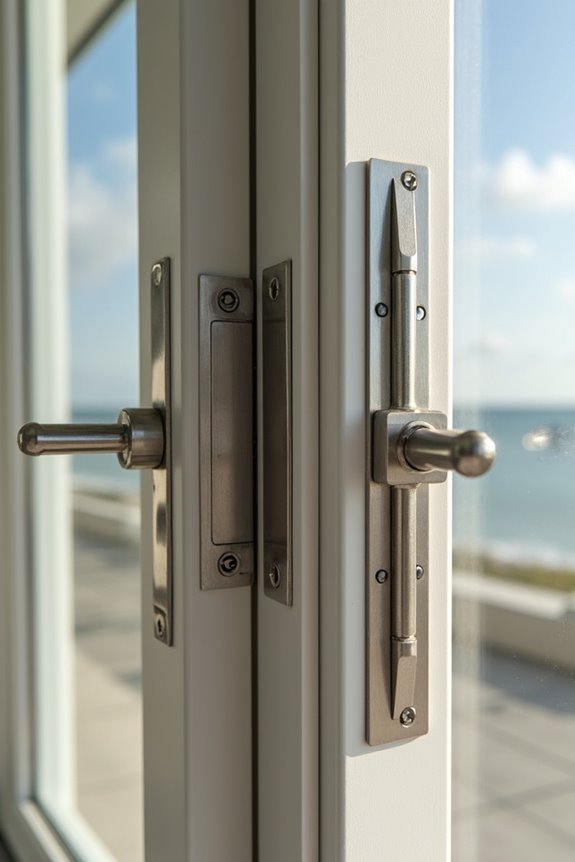
As we face the reality of increasingly severe weather events, the importance of hurricane protection becomes clear. Implementing hurricane preparedness strategies isn’t just wise; it’s essential for safeguarding our homes.
Hurricane-resistant doors play a vital role in storm damage mitigation.
- They reduce risks of structural damage from high winds and flying debris.
- By maintaining building envelope integrity, these doors decrease the likelihood of water damage and increase safety for occupants.
- Investing in reinforced doors can even lower insurance premiums, ultimately saving us from significant repair costs.
Moreover, by complying with local building codes, we’re not just protecting our properties but enhancing their marketability. These measures bring peace of mind, knowing our homes are equipped to withstand the next storm and have adequate energy efficiency features that help in reducing long-term costs.
How Hurricane Resistant Doors Are Constructed

Hurricane-resistant doors are constructed using a combination of specialized materials and engineering techniques, designed to withstand the extreme forces of severe storms.
Materials Selection
These doors often feature aluminum or steel frames for durability, along with impact-resistant glass that absorbs forces from flying debris. Composite materials offer strength while enhancing visual appeal.
Frame Construction
Multi-chambered designs reinforce structural integrity, guaranteeing alignment with stringent testing standards. Thermal breaks are added for energy efficiency.
Impact Features
Laminated glass is tested for large missile impact resistance, essential for safety. Engineers meticulously verify doors can handle intense wind pressures, complying with ANSI A250.13 and local building codes. Additionally, the use of reinforced materials ensures enhanced resistance to forced entry during storm conditions.
With attention to these details, we’re better protected from the tempest.
Wind Resistance and Design Pressures

Wind resistance is a critical factor when designing hurricane-resistant doors, reflecting the need to endure extreme weather conditions. The concept of design pressure (DP) is essential, as it measures both positive and negative wind loads acting on the door assembly.
- Design pressures vary based on wind speed, building height, and terrain exposure. Higher elevations or corners of buildings often encounter increased DP due to wind dynamics.
- For instance, a wind speed of 170 mph corresponds to a DP of +49/-53 psf, indicating severe conditions.
Local building codes, like the Florida Building Code, explicitly dictate DP requirements to guarantee each door’s resilience in hurricane-prone areas. Proper DP calculations assure that doors can withstand extreme wind loads, preserving our building’s integrity. Additionally, achieving energy efficiency standards is vital in ensuring that the structure remains fortified while also minimizing energy consumption.
Benefits of Impact-Resistant Glass

When considering the protective features of doors, impact-resistant glass offers significant advantages beyond simple storm protection. Its design includes multi-layered construction that enhances impact resistance while providing insulation. This means we can expect lower energy costs, often reducing our utility bills by up to 50%.
- Energy Savings: The glass blocks solar heat gain and includes Low-E coatings to maintain indoor comfort.
- Weather Resilience: Impact-resistant glass withstands winds up to 200 mph, preventing dangerous shattering and water intrusion.
Additionally, this type of glass helps reduce outdoor noise, enhancing our comfort indoors. With UV protection against furnishings and flooring fading, it’s a practical investment that pays for itself in energy savings and longevity. We can feel secure knowing we’ve made a smart choice. Impact-resistant solutions also provide enhanced security features that further protect our homes from potential break-ins.
Enhancing Home Security With Reinforced Doors
Reinforced doors greatly enhance home security, primarily through their robust construction and design features. These doors use laminated or tempered glass and sturdy frames made from materials like steel or reinforced fiberglass, delivering exceptional resistance to forced entry.
Key security benefits include:
- Tough locking systems that resist lock-picking
- Multi-layer designs that absorb impact energy
- Reinforcement against break-ins, effectively serving as a burglar deterrent
With their ability to withstand high winds and flying debris, these doors also guarantee year-round protection, minimizing risks during both severe weather and potential intrusions. By integrating these doors into our homes, we not only enhance safety but also contribute to a proactive approach against security threats. Additionally, selecting doors with multi-point locking systems further increases security measures, ensuring a more formidable barrier against unauthorized access.
Energy Efficiency and Cost Savings
Hurricane-resistant doors not only bolster home security but also offer significant energy efficiency benefits. By incorporating multi-pane glass and inert gases like argon, these doors enhance insulation performance. This means we can keep the heat out in summer and retain warmth in winter, stabilizing our indoor temperatures.
Moreover, these energy-efficient doors can save us about $300 annually on heating and cooling costs. With factory-coated Low-E glass, they reflect infrared and UV light, further enhancing comfort throughout the year.
High-quality framing and tight-fitting designs minimize air infiltration, which translates to true energy savings. Overall, these doors not only protect our homes but also contribute to lower utility bills and reduced environmental impact.
Code Compliance and Legal Requirements
In order to guarantee safety during storms, compliance with building codes is crucial. Following the Florida Building Code (FBC) guarantees that our hurricane-resistant doors meet rigorous standards.
Key requirements include:
- Impact resistance against wind speeds from 130 to 180 mph, depending on the zone.
- Successful completion of Florida TAS testing, verifying resistance to flying debris.
- Mandatory compliance checks to validate door hardware meets impact and structural standards.
Local code enforcement officials rigorously inspect buildings in wind-borne debris regions, guaranteeing all doors are compliant. Noncompliance carries penalties, such as fines and delayed occupancy permits. We must keep documentation proving our use of compliant doors ready, as it’s often required during inspections and insurance processes.
Insurance Benefits and Incentives
Insurance companies increasingly recognize the value of hurricane-resistant doors, not just as a safety feature but as a financial incentive for homeowners. By installing these doors, we can enjoy significant insurance savings. Premium incentives for properties with hurricane doors can range from 10% to 45%, depending on location and insurer policies.
Benefits include:
- Reduced storm damage risks, leading to fewer claims over time.
- Higher savings in hurricane-prone states, like Florida, due to mandated incentives.
- Potential for lower deductibles and improved policy terms with certification and professional installation.
These incentives not only ease financial burdens but also enhance our long-term investment in home safety. Investing in hurricane-resistant doors brings peace of mind and financial rewards.
Assessing Your Home’s Vulnerability
How can we effectively assess our home’s vulnerability to hurricane damage? First, we should examine our geographic location. Homes in High Velocity Hurricane Zones, like Miami-Dade County, face severe risks and must comply with regional regulations. Understanding local climate history and storm frequency is essential for storm preparedness.
Next, let’s evaluate the structural integrity of our existing doors. Standard doors often lack reinforced features, making them weak against high winds and debris. We should pay attention to door design, material, and physical condition during our assessment.
Lastly, we need to consult local building codes, ensuring our doors meet performance standards relevant to hurricanes. Documenting our findings will go a long way in enhancing our storm resilience.
Long-Term Value of Hurricane Resistant Doors
Recognizing the vulnerability of our homes to hurricanes leads us to contemplate long-term solutions that enhance safety and value. Investing in hurricane-resistant doors often yields significant returns.
- Cost-Effectiveness: Though these doors may cost 20% to 100% more initially, they save money by minimizing structural damages and even reducing homeowner insurance premiums.
- Market Trends: With a growth rate of 6.5% CAGR, demand for impact-rated doors is rising due to increasing storm activity, reinforcing their desirability.
- Value Appreciation: Homes with hurricane-resistant doors enjoy higher resale values and attract potential buyers looking for enhanced safety.
In our investment analysis, adopting these doors not only guarantees security but also aligns with evolving market demands and regulatory standards.
Maintenance and Care for Impact Doors
Regular maintenance of impact doors is essential to confirm their durability and effectiveness against severe weather conditions. To guarantee ideal performance, we should follow consistent maintenance routines that include:
- Cleaning Tips: Use mild detergent and water regularly to prevent grime buildup. Rinsing coastal doors with fresh water helps eliminate salt residue.
- Hardware Inspection: Check and tighten hinges and locks; lubricate moving parts with corrosion-resistant sprays.
- Weather-Stripping Checks: Examine seals for cracks or wear, replacing them as necessary to maintain efficiency and prevent moisture entry.
- Professional Help: Schedule inspections every few years, especially after storms, to detect hidden issues.
Alternative Hurricane Protection Options
After verifying that impact doors are properly maintained, it’s time to contemplate alternative hurricane protection options available for homeowners.
Temporary Protection Methods
Plywood boards, at a thickness of 5/8 inches, can be a cost-effective choice for covering windows. It must be cut precisely to fit securely, but storing them can be cumbersome. Lightweight ballistic nylon fabric offers flexible protection, preventing debris entry even if it doesn’t eliminate all breakages.
Permanent Hurricane Window Options
For lasting solutions, we might explore impact-resistant windows. These utilize laminated glass or multiple bonded layers for extra strength. Additionally, hurricane shutters made from steel or aluminum provide robust coverage but must be installed properly to verify effectiveness during storms.
Making the Decision: Do You Need Them?
How do we determine whether installing hurricane-resistant doors is vital for our homes?
First, we must assess our region’s susceptibility to hurricanes. For those in coastal or hurricane-prone areas, these doors provide critical storm safety by withstanding winds up to 140 mph.
Impact-resistant doors not only guarantee property protection but also enhance security against burglaries due to their reinforced frames and advanced locking systems.
Additionally, they offer energy efficiency benefits, reducing heating and cooling costs through improved insulation.
Finally, financial incentives such as insurance discounts can make these doors a practical investment.
Frequently Asked Questions
How Do Hurricane-Resistant Doors Compare to Standard Doors in Cost?
When comparing costs, hurricane-resistant doors infamously bite the wallet harder, with higher installation costs reflecting their durability. However, they’re built to last, making them a wise choice for protecting our homes in the long run.
Can I Install Hurricane-Resistant Doors Myself?
We can install hurricane-resistant doors ourselves, but we should be aware of installation challenges. Following DIY tips, like precise measurements and using correct tools, will help guarantee a successful and safe installation experience together.
What Style Options Are Available for Hurricane-Resistant Doors?
Choosing hurricane-resistant doors is like picking a sturdy umbrella for a storm. We’ve got beautiful design variations and durable material options—wood, vinyl, fiberglass, and steel—to create the perfect blend of style and strength for our homes.
Are Hurricane-Resistant Doors Noisy During Storms?
Hurricane-resistant doors aren’t noisy during storms; they actually lower noise levels considerably. As we experience storm dynamics together, we’ll enjoy a calm, secure atmosphere, free from the howling winds and pounding rain outside our homes.
Do Hurricane-Resistant Doors Require Special Maintenance?
Absolutely, hurricane-resistant doors do require special maintenance. We should adhere to a regular maintenance schedule, including special inspections, to guarantee our doors protect us through every storm, just like a sturdy fortress shielding its inhabitants.


