As an Amazon Associate, we earn from qualifying purchases. Some links on this site are affiliate links at no extra cost to you. Our recommendations are based on thorough research and editorial judgment.


How To Choose Door Locks?

To choose door locks, we should first assess the security level, focusing on lock grades. Grade 1 is ideal for commercial use, while Grade 2 suits residential needs. We need to guarantee ease of use, opting for lever handles over knobs, and confirm compatibility with existing hardware. Additionally, consider weather resistance for durability in harsh climates. Understanding key control measures is essential as well. For further details on advanced lock technologies and insurance requirements, let’s explore more options.
Key Takeaways
- Assess the security level needed by selecting lock grades that match your specific requirements, from basic residential to high-grade commercial options.
- Choose between various types of locks such as deadbolts, smart locks, or mortise locks based on the intended application and security features.
- Consider ease of use and installation, ensuring the lock can be operated with minimal force and is compatible with your current door hardware.
- Evaluate weather resistance to ensure durability in harsh climates, selecting materials like stainless steel or marine-grade alloys for outer doors.
- Review insurance requirements to ensure your chosen locks meet necessary standards for coverage, particularly for external doors and windows.
Understanding Different Types of Door Locks
You may be interested


When we think about securing our homes, understanding the different types of door locks is essential for making informed choices. Each lock type serves a distinct lock purpose and varies by material types, impacting overall security.
Deadbolts: These locks lack a spring mechanism, making them tough to tamper with. They’re ideal for exterior doors.
Knob Locks: Commonly found on interior doors, they’re easy to install but provide minimal external security.
Cylinder Locks: As part of deadbolt systems, these use aligned pins and are difficult to pick.
Multipoint Locking Systems: Engaging multiple bolts, they are often required by home insurance providers and enhance security.
Smart Locks: Offering keyless entry, they’re convenient but require a power source for operation. Additionally, many modern locks feature high-security standards that enhance protection against unauthorized access.
Understanding these options can guide us in selecting the right locks for our needs.
Evaluating Security Levels and Standards

How do we determine the security of door locks? Evaluating lock grades helps us understand their security benchmarks. The ANSI/BHMA system categorizes locks into three grades:
- Grade 1: Highest standard for commercial use, emphasizing security and durability.
- Grade 2: Suitable for residential and light commercial applications, providing moderate security.
- Grade 3: Designed for basic residential needs, ideal for interior doors.
Locks undergo rigorous testing, which includes impact resistance, cycle operation, and forced entry resilience. These assessments guarantee they meet specific standards under various conditions. When choosing a lock, considering these grades and benchmarks will help us select one that adequately protects our homes and businesses while reflecting our security needs.
Exploring Lock Mechanisms and Technologies

Lock mechanisms play an essential role in how we secure our doors and property. Understanding the various types can help us make informed choices that suit our needs.
Types of Lock Mechanisms****
- Mortise Locks: Embedded into the door, combining strength and design aesthetics.
- Deadbolts: Provide high security; ideal for exterior doors.
- Cylinder Locks: Pin-based for enhanced security and difficult to pick.
- Hand Lever Locks: Often easier to use; suitable for interior spaces.
- Digital Locks: Keyless convenience, but consider battery life.
- Biometric Locks: Secure access through unique user identification.
When choosing a lock, we must ascertain lock compatibility with our doors. Additionally, considering factors such as material durability ensures the longevity and effectiveness of your lock system. Balancing functionality with design aesthetics can enhance both security and visual appeal.
Assessing Ease of Use and Practical Considerations

As we evaluate door locks, it’s crucial to contemplate their ease of use alongside practical functionality. User-friendly designs, such as lever handle locks, offer more accessible operation compared to knob locks. This is particularly beneficial for individuals with limited hand strength or disabilities, enhancing safety and convenience.
Installation simplicity is also significant. We should seek locks that are easy to install, often achievable with just a screwdriver, minimizing the need for specialized tools. Confirming compatibility with our current door hardware can prevent extensive modifications, further easing the process.
Finally, maintaining durability with weather-resistant materials guarantees consistent performance, safeguarding ease of use over time. Selecting locks that balance these features ultimately leads to a more satisfying user experience. Additionally, considering options with keyless turn locks can enhance both privacy and security.
Investigating Smart and Modern Locking Solutions
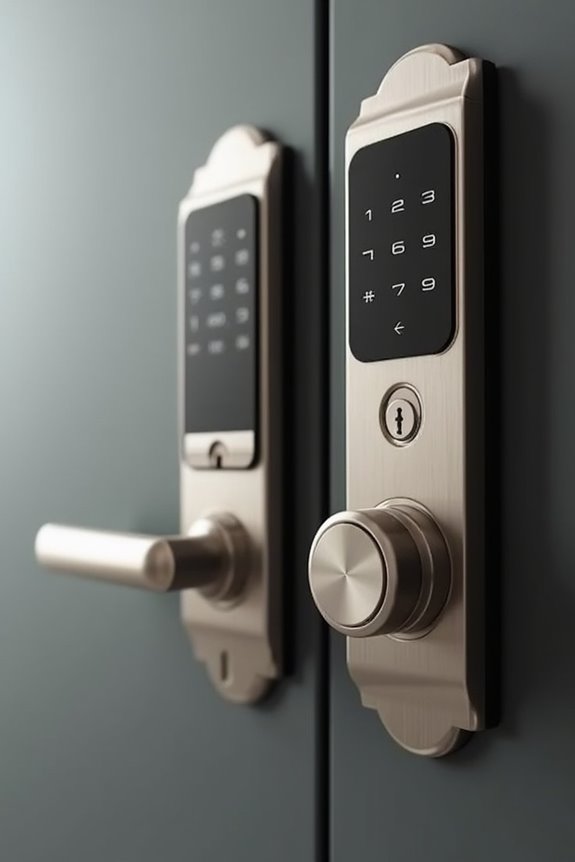
Smart lock features have transformed security options markedly. For instance, Wi-Fi smart locks, like the August Wi-Fi Smart Lock, enable remote access directly through Wi-Fi without additional hardware. Fingerprint and keypad locks provide customizable access for up to 100 users, enhancing flexibility.
Additionally, invisible smart locks maintain aesthetic appeal while offering keyless entry and door notifications. Other options include retrofit locks that integrate smart capabilities without altering your existing setup. Many contemporary smart locks also come with enhanced durability features, ensuring material durability against forced entries and harsh weather conditions.
Emphasizing connectivity, many locks integrate with voice assistants, providing hands-free control. These advancements offer us greater convenience and enhanced security, ensuring our homes remain protected through modern technology.
Identifying Security Enhancements and Best Practices
When we enhance our home security, it is crucial to implement a combination of advanced technologies and best practices.
Advanced Authentication
Incorporating features like fingerprint recognition and palm vein biometrics strengthens our security. This multipath authentication guarantees that only authorized users gain access.
Security Layering
Utilizing different lock grades makes our entrances more secure. For instance, ANSI Grade 1 locks resist typical attack methods like picking and drilling.
Backup Access
Reliable locks should come with key backups and emergency charge options. This guarantees we maintain access during electronic failures, adding another layer of security. Moreover, integrating a smart home system allows seamless control and monitoring of all security features in your home.
Prioritizing Lock Materials and Durability
Choosing the right materials for door locks is essential, since they directly impact security, longevity, and performance. We must consider the material characteristics of each option.
- Solid Brass provides good aesthetics but is less durable over time.
- Bronze offers excellent corrosion resistance, ideal for outdoor use.
- Stainless Steel excels in hardness and corrosion resistance, perfect for high-security applications.
- Zinc Alloy is heavy and durable, suited for high-traffic areas.
- Aluminum Alloy is lightweight and allows for intricate designs, but isn’t as long-lasting.
Additionally, material quality and durability are critical factors that influence the overall effectiveness and longevity of door locks. In our decisions, we should balance durability with lock aesthetics to guarantee our locks meet both functional and visual needs. By prioritizing these materials, we can enhance the overall effectiveness of our door locks.
Matching Lock Types to Specific Doors
For interior doors, knob locks offer basic privacy, ideal for spaces like bedrooms and bathrooms. Lever handle locks, with their easy operation, cater well to high-traffic areas. Mortise locks excel in commercial settings requiring durability.
Finally, cylinder locks provide versatility for various doors, easily rekeyed or replaced. It’s essential to match the lock type with the door’s purpose, ensuring both security and accessibility are prioritized.
Considering Accessibility Needs
Recognizing the importance of accessibility in door locks guarantees we cater effectively to users with varying abilities. By employing inclusive design principles, we make certain that locks function smoothly for everyone. For example:
- Locks should require no more than 5 pounds of force to operate.
- Lever-style handles are preferable, avoiding wrist twisting and tight grasping.
We should place hardware between 34 inches and 48 inches above the floor, facilitating easy access for wheelchair users. Incorporating user feedback is essential; it helps us understand challenges faced by individuals with disabilities.
Confirming that electronic locks have buttons or sensors within reachable distances enhances usability. By prioritizing these accessibility needs, we create a welcoming environment for all users, ultimately enhancing safety and convenience.
Checking Compatibility With Existing Hardware
When selecting a new lock, it’s essential to verify compatibility with existing hardware. First, we need to identify our current lock type—whether it’s a deadbolt or knob/lever style, as this affects our options based on lock technology.
Next, we must measure our door thickness, usually 1.75 inches, and check the backset, typically 2 3/8 or 2 3/4 inches.
Finally, we should ascertain the new lock aligns with the existing strike plate and latch projection dimensions. Misalignment can lead to security issues or improper closing. By methodically verifying compatibility with these aspects, we’ll find a lock that not only fits but also enhances our home’s safety.
Understanding Key Control and Duplication
Key control serves as a foundational aspect of security in both residential and commercial environments. It determines who can possess and duplicate keys, thereby directly enhancing our safety.
Key Duplication Types
- Unlimited Duplication: Standard keys copied anywhere without restrictions.
- Restricted Keys: Patented keys that can only be duplicated by authorized dealers.
- Custom Keys: Unique designs needing direct manufacturer approval.
- Electronic Keys: RFID or encrypted fobs that eliminate traditional duplication concerns.
Access Management Practices
- Issue keys only to vetted individuals.
- Maintain logs to track key distribution.
- Regular audits guarantee control over access and minimize risks associated with unauthorized duplication.
Evaluating Weather Resistance and Environmental Suitability
In climates where temperature extremes and environmental factors are prevalent, the selection of door locks requires careful consideration of their weather resistance and suitability. We need to prioritize locks with robust weatherproof features to effectively withstand harsh conditions.
Material Selection
Choosing durable materials, like stainless steel or marine-grade alloys, guarantees superior corrosion resistance. Additionally, corrosion-resistant finishes help locks endure moisture exposure, while internal seals protect against dust and water ingress.
Design Considerations
Opting for deadbolts made from weather-resistant materials enhances security, but knob and lever locks may need additional protective features. For electronic smart locks, verify they’re rated for outdoor use and feature waterproof housings to secure functionality across temperature ranges.
Being Aware of Insurance Requirements
Being mindful of insurance requirements is essential when choosing door locks for your property. Most insurers mandate a five-lever mortice deadlock on all external doors to maintain valid insurance coverage. Compliance implications arise if we fail to meet these regulations, as claims may be denied or reduced.
Locks must comply with recognized standards, like British Standard BS3621 or TS007 3-star Kitemark. Insurers often favor multi-point locking systems for enhanced security, especially on accessible windows. Checking our insurance policy documents helps guarantee we install locks that meet minimum requirements.
Regularly maintaining locks not only keeps them functional but also guarantees compliance. Upgrading to high-security locks can yield significant premium reductions, ultimately protecting our investment.
Planning for Future Needs and Upgrades
When we evaluate the long-term effectiveness of our door locks, planning for future needs and potential upgrades becomes essential. To guarantee we’re future proofing locks, we should choose models compatible with smart home systems like Google Home or Amazon Alexa.
Key Factors to Evaluate:
- Remote Access: Locks with mobile app integration provide added convenience and security.
- Durability: Select high-grade stainless steel locks with Grade 1 ratings for longevity and wear resistance.
- Security Enhancements: Opt for systems with tamper-resistant features and multiple locking points.
- Flexibility: Locks that provide temporary access codes for guests enhance security without hassle.
Effective upgrade planning involves understanding these features, guaranteeing our security evolves alongside emerging threats.
Frequently Asked Questions
What Is the Average Lifespan of Different Door Locks?
The average lifespan of different door locks varies: deadbolts last 7-10 years, mortise locks 15-20 years, and digital locks around 3-7 years. Understanding types of locks helps us appreciate their lock durability even more.
How Often Should I Change My Door Locks?
Like the heartbeat of our home, we should think about changing our door locks every 5 to 10 years for ideal security system integration. Let’s prioritize lock replacement frequency to protect our sanctuary together.
Are There Locks Resistant to Rust and Corrosion?
Yes, there are locks resistant to rust and corrosion. We can look for options made from stainless steel or brass, and remember that corrosion prevention coatings extend their lifespan, keeping our doors secure and beautiful.
How Do I Properly Maintain My Door Locks?
Just as we cherish our moments together, maintaining our door locks requires regular love. By using effective cleaning techniques and proper lock lubricant, we guarantee they serve us well and stay secure for years to come.
What Are Common Mistakes People Make When Choosing Door Locks?
We often make mistakes in lock type selection by prioritizing appearance over security features comparison. Let’s guarantee our choices meet safety standards and fit our door’s requirements, avoiding vulnerabilities and enhancing our home’s security together.


