As an Amazon Associate, we earn from qualifying purchases. Some links on this site are affiliate links at no extra cost to you. Our recommendations are based on thorough research and editorial judgment.


How To Choose Energy Efficient Windows?

To choose energy-efficient windows, we should evaluate frame materials, glazing options, and energy ratings. For frames, fiberglass offers durability and insulation, while vinyl is cost-effective but less durable. Glazing options like double or triple-pane glass greatly improve insulation. We can also check NFRC labels for U-Factor and SHGC ratings, helping us understand energy performance. Consider our local climate needs when selecting, as certain technologies enhance efficiency. Further details on optimizing our choices can be explored.
Key Takeaways
- Assess frame materials; fiberglass offers superior insulation and longevity compared to vinyl, wood, aluminum, and composite options.
- Opt for double-pane or triple-pane glazing to significantly reduce energy loss and improve insulation efficiency.
- Check for NFRC labels to compare U-Factor, SHGC, and VT values for optimal energy performance in your climate.
- Consider Low-E coatings to enhance energy efficiency by reflecting infrared heat, improving climate control, and boosting savings.
- Factor in additional technologies like gas fills and advanced insulation materials to maximize overall window performance and efficiency.
Understanding Frame Materials
You may be interested


Choosing the right window frame material is essential for enhancing energy efficiency in our homes.
Fiberglass frames provide notable benefits, such as low thermal conductivity and superior insulation, often lasting over 80 years with minimal maintenance.
On the other hand, vinyl‘s cost-effective nature comes with drawbacks; while it resists moisture, it may not be as durable as fiberglass.
Wood frames offer timeless aesthetics but require more upkeep due to potential moisture damage.
Aluminum frames are known for their durability, suited to larger windows, yet can lead to higher energy bills unless treated with thermal breaks.
Lastly, composite frames combine engineered wood and polymers, providing stability, moisture resistance, and aesthetic appeal but often come at a higher price. Additionally, energy-efficient models can significantly enhance insulation, making them a great option for homeowners looking to reduce energy costs.
Exploring Glazing Options

When we consider the energy efficiency of our windows, the choice of glazing becomes increasingly important. There are several options available, each with distinct glazing advantages and costs.
Single-pane glass offers minimal insulation, resulting in increased energy loss. In contrast, double-pane glazing improves insulation by up to 43% with an air or gas-filled layer, while triple-pane glazing provides the highest efficiency with a third pane.
Low-emissivity (Low-E) coatings further enhance energy performance by reflecting infrared heat. Additionally, options like Low-E glass technology can significantly improve energy efficiency ratings, making them ideal for homeowners looking to reduce utility costs.
While argon gas is commonly used for its affordability, krypton gas provides superior insulation, albeit at a higher glazing cost. Understanding these options aids in selecting windows that optimize energy efficiency and comfort.
Interpreting Energy Ratings and Standards

Understanding energy ratings and standards is essential for making informed window selections. By reading NFRC labels, we can evaluate standardized energy performance ratings for windows, doors, and skylights. These ratings allow us to compare products based on their U-Factor, Solar Heat Gain Coefficient (SHGC), and Visible Transmittance (VT).
- U-Factor: Indicates heat transfer; lower means better insulation.
- SHGC: Measures solar heat admitted; lower values reduce heat gain.
- Visible Transmittance (VT): Shows the amount of natural light; higher values allow more light.
When we choose ENERGY STAR certified windows, we can trust that they meet or exceed minimum energy performance standards tailored for our local climate. Energy-efficient windows improve overall home comfort and can significantly reduce utility costs. Understanding these ratings helps us select the right windows for our home.
Evaluating the Benefits of Energy Efficient Windows
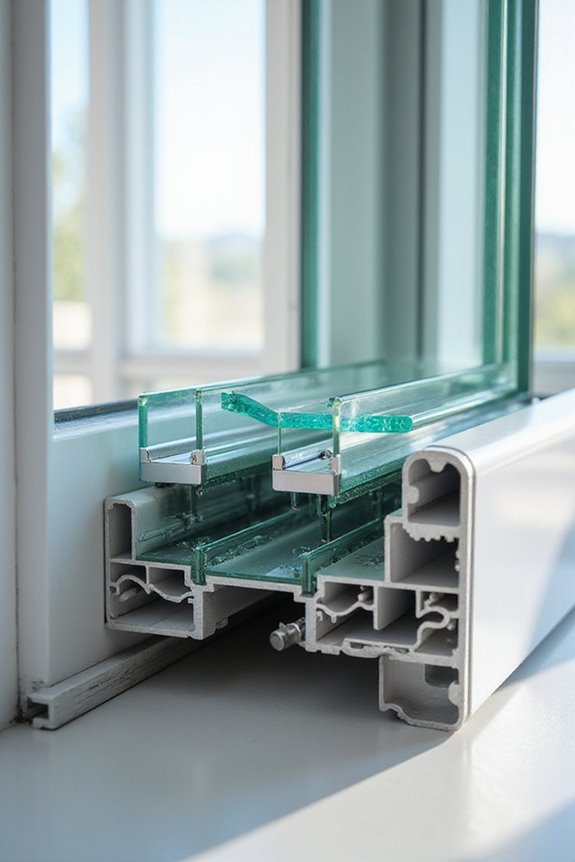
Evaluating the benefits of energy-efficient windows raises an essential question: how can we effectively improve both our comfort and energy savings by making the right choice?
By upgrading to ENERGY STAR® certified windows, we can experience significant cost savings. Households typically save 13% on energy bills, translating to $126-$465 annually depending on our region. Additionally, these upgrades lower our HVAC operational costs by minimizing peak heating and cooling loads.
Beyond personal savings, energy-efficient windows offer substantial environmental benefits. Reduced CO2 emissions range from 1,006 to 6,205 pounds annually, equivalent to conserving 51 to 317 gallons of gasoline. By choosing better windows, we’re not just saving money; we’re contributing to a healthier planet. Furthermore, the use of low-E glass coatings enhances climate control, which can further boost energy savings.
Considering Frame and Window Design

Choosing the right frame and window design is essential for maximizing energy efficiency in our homes. The frame material we select greatly influences thermal performance.
- Fiberglass frames have low thermal conductivity, while vinyl frames trap air in multiple chambers, improving insulation.
- Wood frames provide natural insulation but need maintenance, unlike durable composite frames that resist moisture.
- Aluminum frames, unless equipped with thermal breaks, can lead to heat loss.
When considering frame aesthetics, let’s not forget about installation techniques. Proper installation guarantees ideal sealing and enhances efficiency, preventing air leakage. Ultimately, each choice impacts energy costs and comfort, so understanding these factors strengthens our decision-making. Additionally, selecting windows with a U-factor of 0.30 or lower can significantly enhance your home’s energy efficiency.
Discovering Additional Technologies for Efficiency
As we explore ways to enhance energy efficiency, several advanced technologies offer considerable improvements for windows.
Advanced Coatings
Low-emissivity (Low-E) coatings reflect infrared heat, maximizing heat retention in winter while allowing visible light to enter. Nanotechnology can create self-cleaning surfaces using titanium dioxide, considerably reducing maintenance by breaking down dirt with sunlight.
Insulation Materials
Aerogel, an incredible super-insulating material, can double the insulation value when inserted into double-pane windows, minimizing heat loss by up to 65%. Meanwhile, gas fills like argon and krypton enhance thermal performance by decreasing heat transfer.
Frame Innovations
Modern frames utilize insulating materials and thermal breaks, effectively preventing heat loss and enhancing overall window efficiency. Choosing the right window frame material is pivotal in maximizing energy efficiency in your home.
Combining these technologies guarantees we achieve ideal energy performance in our homes.
Assessing Your Regional Climate Needs
How can we guarantee our windows suit our regional climate needs? To assure energy efficiency, we must consider our specific climate impact.
In colder climates, we should select windows with a U-factor of ≤ 0.30, maximizing heat retention. For mixed climates, a U-factor ≤ 0.32 and a Solar Heat Gain Coefficient (SHGC) ≤ 0.40 is ideal to support seasonal adjustments.
In warmer areas, windows should have an SHGC ≤ 0.30 to block excessive heat, while U-factors can go up to ≤ 0.60 to enhance cooling.
Key metrics like air leakage ratings under 0.30 cfm/sq ft improve efficiency further. This thoughtful approach assures our windows adapt to both winter’s chill and summer’s warmth, maintaining comfort all year.
Frequently Asked Questions
How Does Window Installation Affect Energy Efficiency?
Imagine our window frames as snug hugs for our homes. When installation’s right, seal integrity’s maintained, preventing air leaks and ensuring energy efficiency. Together, we create cozy, energy-efficient spaces that stand the test of time.
Can I Replace Just the Glass in My Windows?
Yes, we can replace just the glass in our windows! Opting for a glass replacement during a window retrofit is a cost-effective choice, especially if the frames are still in good condition. Let’s explore this option together!
What Maintenance Do Energy-Efficient Windows Require?
To maintain our energy-efficient windows, let’s use gentle cleaning techniques and guarantee regular seal replacement. By checking for drafts and keeping them clean, we’ll protect our investment and enjoy a cozy, efficient home together.
Are Energy-Efficient Windows Worth the Investment?
Absolutely, energy-efficient windows are worth the investment! With potential cost savings of up to $5,000 over a decade, their return on investment enhances our comfort and reduces our environmental impact, nurturing a cozy, peaceful home together.
How Do Weather Conditions Influence Window Performance?
Weather conditions considerably influence window performance, especially with varying window materials across climate zones. We’ll need to contemplate how each type responds to heat and cold, ensuring our choices help maintain comfort and energy efficiency year-round.