As an Amazon Associate, we earn from qualifying purchases. Some links on this site are affiliate links at no extra cost to you. Our recommendations are based on thorough research and editorial judgment.


How To Pella Replacement Windows?

To install Pella replacement windows, we start by selecting the right type—wood, fiberglass, or vinyl. Next, we must accurately measure the window frame at three points for width and height, taking the smallest dimensions. Gather essential tools like measuring tape, screwdrivers, and caulk gun. After removing the old window, guarantee proper insulation with low-expansion foam and seal any gaps with high-quality caulk. For more detailed steps and maintenance tips, we encourage you to explore further.
Key Takeaways
- Choose the right window type and material from Pella’s options, including wood, fiberglass, and vinyl, based on your needs.
- Accurately measure your current window frames for width and height at multiple points to ensure a proper fit.
- Decide between pocket or full-frame replacement based on the condition of your existing window frames.
- Follow the step-by-step installation process, focusing on safe removal and proper sealing techniques.
- Perform regular maintenance, including checking seals and cleaning glass, to ensure the longevity of your Pella windows.
Understanding Pella Replacement Window Types
You may be interested


When considering Pella replacement windows, it’s essential to understand the variety of options available, as each serves different preferences and needs.
Pella Window Materials****
Pella offers three main materials: wood, fiberglass, and vinyl. Wood interiors can feature aluminum-clad exteriors for added weather resistance. Fiberglass is strong and low-maintenance, while vinyl provides an affordable, energy-efficient choice. Additionally, Pella windows feature energy efficiency ratings that can significantly reduce unwanted heat gain.
Pella Window Styles****
Pella window styles include double-hung, single-hung, awning, casement, and more. Double-hung windows have two movable sashes for ventilation, while single-hung models have a fixed upper sash. Custom sizes and styles cater to both traditional and contemporary homes, making it easy to find the perfect fit for your space.
Choosing Between Pocket and Full-Frame Replacements

Deciding whether to opt for pocket or full-frame replacements involves evaluating existing window conditions and our specific needs.
Pocket Replacements
- Ideal if the existing frame is in good condition, sealed, and free of leaks.
- They’re faster, typically taking about one hour per window and costing less due to minimal demolition.
- However, size is limited to the existing frame dimensions.
Full-Frame Replacements
- Necessary for frames with water damage or if we want different window sizes.
- They provide a clean slate for insulation, enhancing energy efficiency.
- Keep in mind these installations are more invasive, requiring more time and skilled labor.
- It is essential to consider energy-efficient windows that can significantly reduce heating and cooling costs.
Ultimately, our choice must align with long-term energy efficiency goals and installation considerations.
Importance of Accurate Measurements

Accurate measurements play an essential role in ensuring that our new windows fit properly and perform efficiently. To avoid costly measurement errors, we should measure the width at three different points—top, middle, and bottom—and the height at three locations—left, center, and right. Using the smallest dimensions prevents air leakage and drafts that can impact window performance.
It’s also vital to document our findings immediately, as accuracy here lays the foundation for proper fitting. Ensuring that our measurements reflect the necessary product dimensions will avoid issues such as structural stress and water intrusion. Ultimately, precise measurements lead to an efficient installation process, enhancing long-term window durability and functionality in our homes. Additionally, achieving an accuracy of 1/8 inch is crucial for proper fit.
Essential Tools and Materials Needed
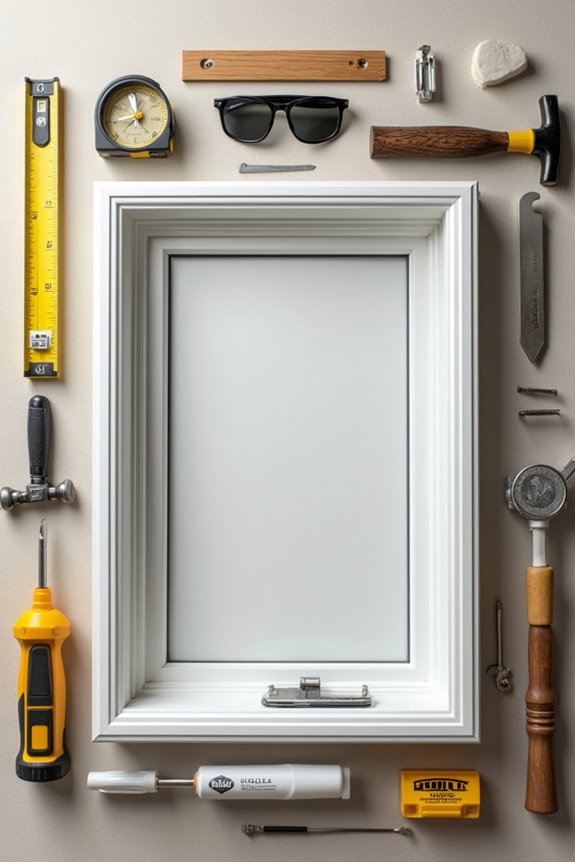
*Hand Tools:*
- Measuring Tape
- Screwdrivers (Phillips and flathead)
- Hammer
- Utility Knife
- Caulk Gun
Installation Materials:
- Pella Installation Sealant
- Pella Low-Expansion Foam
- Shims
- Flashing Tape (Pella SmartFlash)
- Screws and Anchors
Safety Equipment:
- Gloves
- Safety Goggles
- Dust Mask
- Knee Pads
- Work Boots
Measuring and Leveling Supplies:
- Level (Laser or Spirit)
- Square
- Pencil or Marker
- Cleaning Cloths
Gathering these items will prepare us for a smooth shift to installing our new Pella windows. Durable aluminum alloy frames provide a strong foundation for the window’s installation.
Steps for Removing Old Windows

When we tackle the removal of old windows, it’s essential to follow a systematic approach to assure safety and efficiency. First, confirm window lock disengagement before proceeding. For single-hung windows, raise the lower sash about 4 to 6 inches for better access.
Next, we’ll gently remove the interior stops using a flathead screwdriver, being careful not to break them. After that, we’ll identify the sash balance type—either cords or balance shoes. If it’s cords, cut them with a utility knife after supporting the sash. For balance shoes, disengage them with a Phillips head screwdriver.
Finally, we’ll tilt the sash inward or outward, easing it out of the frame smoothly to avoid damage. Always prioritize safety with proper gear. It’s advisable to consider energy efficiency features during your window selection process to enhance your home’s performance.
Preparing the Window Opening
Successful window replacement starts with properly preparing the window opening to guarantee a seamless installation. First, we’ll complete essential cleaning procedures. This means removing all debris, old caulking, dust, and any loose materials from the opening. We should also inspect for water damage or mold, addressing any issues before moving forward.
Next, let’s check our measurements. We’ll measure the opening width and height at multiple points, taking the smallest dimensions. It’s vital to ascertain the opening is square; measuring diagonals will confirm this.
Finally, we’ll focus on window frame preparation, making sure framing is stable and making adjustments where needed. This meticulous approach helps us achieve a solid base for the Pella window, paving the way for a flawless installation. Additionally, ensure that the installer adheres to industry standards for quality and safety to further support a smooth process.
Dry Fitting the New Window
Proper dry fitting is essential to confirm that our new Pella window can be installed without complications. We’ll start by inserting the window into the opening without any sealants or screws, checking for level, plumb, and square placement. Consistent gap measurements help us confirm a proper fit.
Next, we’ll use shim placement around the frame to achieve level installation. It’s important to insert shims at meeting rails and corners, maintaining a 1/2-inch gap from both the interior and exterior surfaces. We’ll make any necessary dry fit adjustments to keep the window stable, preventing warping during the fastening process. Finally, we should verify that everything operates smoothly, confirming a seamless and efficient installation when we progress to the next steps.
Proper Flashing and Sealing Techniques
To guarantee water resistance and durability around our new Pella windows, employing correct flashing and sealing techniques is essential.
Flashing Tape Application
We start by using flashing tape to create a waterproof barrier. The tape extends 1-1/2″ past each jamb end for overlap and needs to rise at least 4″ above the vertical jambs, overlapping onto the weather resistive barrier. For angled tops, apply short overlapping pieces to avoid gaps.
Silicone Sealant
Next, we apply high-quality silicone caulk around the exterior perimeter. Using a continuous bead seals joints and prevents water penetration.
Integration with Building Wrap****
We fold the building wrap inward at the jambs, then secure with flashing tape, integrating window flashing with the house’s weather barrier for maximal protection.
Installing the Window
Begin by preparing the window opening to guarantee a seamless installation for our new Pella replacement window. We’ll carefully remove the old window sashes, preserving reusable parts such as sash stops. Next, we need to clean the opening thoroughly to verify a proper fit and seal.
Let’s dry fit the new Pella window in the opening to confirm its size and identify shim locations. We’ll start by positioning the window with the bottom first, using shims to level and square it. Remember, shims should maintain about 1/2 inch spacing from the interior and exterior surfaces. We can then pre-drill holes in the window frame to anchor it securely, ensuring the installation firmly holds and operates smoothly with any window types we’re using.
Insulation Methods for Improved Efficiency
While we focus on enhancing energy efficiency in our Pella replacement windows, selecting the right insulation methods is essential. Utilizing insulating glass units (IGUs) is fundamental. Double- and triple-pane glass options increase thermal resistance, especially when filled with argon gas that minimizes heat transfer.
Additionally, incorporating foam insertion within the multi-chambered vinyl frames enhances thermal performance. By applying low-expansion foam sealant around the window frame, we effectively fill gaps and prevent drafts, creating a continuous air barrier. It’s critical to use low-pressure polyurethane foam to avoid damaging our window installations.
Together, these methods not only improve energy efficiency and reduce heat loss but also guarantee our Pella windows perform at their best, keeping our indoor spaces comfortable year-round.
Final Sealing and Caulking Processes
Achieving a proper seal around Pella replacement windows requires meticulous attention to detail, starting with surface preparation. We must verify all exterior surfaces are clean, dry, and free of debris for peak sealant adhesion. Removing old paint and verifying proper insulation of gaps is essential.
For our sealant selection, we should use high-quality, exterior-grade caulk that’s flexible and durable. Employing effective caulking techniques involves applying caulk evenly around the window perimeter and tooling it immediately for a smooth finish that promotes water shedding.
Additionally, creating a positive slope on the sill aids drainage. By integrating flashing and verifying continuous sealant lines, we can effectively prevent moisture intrusion and maintain the integrity of our installation.
Post-Installation Inspection Checklist
Having completed the final sealing and caulking processes, it’s time for a meticulous post-installation inspection checklist. This step is essential for guaranteeing our Pella windows perform their best and last long.
Frame Inspection
- Confirm there’s no rot or warping in the existing frame.
- Check frame alignment and squareness for proper fit.
Opening Preparation
- Remove any debris to guarantee proper adhesion.
- Level the sill, and apply flashing tape for effective weatherproofing techniques.
Window Fit and Performance
- Dry fit the window to check dimensions.
- Verify all seals and flashing tape are intact.
Securement
– Use recommended fasteners, making certain the window remains level post-fastening.
Maintenance Tips for Longevity
Proper maintenance is essential for guaranteeing our Pella replacement windows remain functional and visually appealing over time. Regular glass cleaning is key; we should use mild soap with a clean, grit-free cloth at least twice a year. Monthly cleaning is ideal for high-traffic areas.
Frame inspection is just as important. We recommend checking seals and frames for wear or damage every few months. Ascertain drainage weep holes are clear to prevent water accumulation, which can damage the frame. Lubricating moving parts with a silicone-based lubricant keeps everything operating smoothly, while prompt replacement of broken hardware enhances functionality.
Frequently Asked Questions
What Is the Warranty Coverage for Pella Replacement Windows?
Pella’s warranty coverage is quite reassuring, offering limited lifetime terms for many products. Yet, we should be mindful of coverage limitations, like exclusions for damage from misuse or external events. Always read the specifics together.
Can I Install Pella Windows Myself, or Should I Hire a Professional?
We can certainly attempt DIY installation of Pella windows, but for peace of mind and ideal results, hiring professional assistance might be wiser. Their expertise helps prevent potential mistakes and guarantees everything’s installed correctly and efficiently.
How Do I Choose Window Styles That Match My Home’s Design?
When choosing window styles that match our home’s design, let’s consider modern styles for a sleek look or classic designs for timeless charm. We’ll find the perfect balance to enhance our home’s beauty together.
What Energy Efficiency Ratings Should I Look for in Replacement Windows?
When we choose windows, it’s like planting seeds for comfort and savings. Look for ENERGY STAR labels and prioritize low U-Factor, SHGC, and AL ratings; they’ll help us create our sanctuary with efficiency and warmth.
How Long Does the Installation Process Typically Take?
The typical duration for window installation usually takes just over an hour for simple projects. However, we’ve found that full-frame replacements can extend our installation timeline to one or two days, depending on the complexity.


