As an Amazon Associate, we earn from qualifying purchases. Some links on this site are affiliate links at no extra cost to you. Our recommendations are based on thorough research and editorial judgment.


Pros And Cons Of Weatherproof Doors?

Weatherproof doors provide several advantages. Their energy efficiency can lead to savings of 25-30% on energy costs, translating to annual heating savings of $200-$500. They also offer enhanced protection from weather elements, durability lasting up to 100 years for steel doors, and significant security features like multi-point locking systems. However, initial costs can be between $2,000 and $5,000. Exploring both the benefits and potential drawbacks can help us make an informed decision.
Key Takeaways
- Energy Efficiency: Weatherproof doors can save 25-30% on energy costs by reducing heat loss and air leakage around frames.
- Weather Protection: They act as effective moisture barriers, preventing water damage, mold growth, and drafts caused by wind.
- Durability: High-quality materials like steel ensure long lifespans of 30 to 100 years with minimal maintenance required.
- Security Features: Enhanced resistance to forced entry and compliance with strict building codes improve home security.
- Cost Savings: While upfront costs range from $2,000 to $5,000, long-term savings and IRS tax credits make them financially beneficial.
Energy Efficiency Benefits
You may be interested


When we consider upgrading our homes, one aspect we shouldn’t overlook is the energy efficiency benefits of weatherproof doors. These doors excel at climate control by considerably reducing heat loss and gain. They can save us between 25-30% on energy costs by minimizing air leakage around door frames.
The insulation and tight seals in these doors reduce the workload on our HVAC systems, leading to lower energy consumption. For instance, we can save about $200-$500 annually on heating costs and $100-$300 on cooling costs. Additionally, employing high-performance weather seals ensures optimal sealing and insulation, further enhancing energy efficiency.
To maintain these energy savings, proper installation and regular inspection of weatherstripping materials are essential. By ensuring a snug fit, weatherproof doors contribute to long-lasting energy efficiency, keeping our homes comfortable year-round.
Protection From Weather Elements

Moisture Barriers
These doors create effective moisture barriers, preventing rainwater and melting snow from infiltrating our homes. This inhibits water damage and stops mold growth, maintaining our air quality. Additionally, some doors incorporate water management features designed to channel water away from frames, enhancing their protective capabilities.
Wind Resistance
Their wind resistance capabilities minimize drafts and stabilize indoor temperatures, helping us stay comfortable year-round. High-quality weatherproof doors seal gaps, securing against strong gusts that could bring in dust and debris.
Durability and Longevity
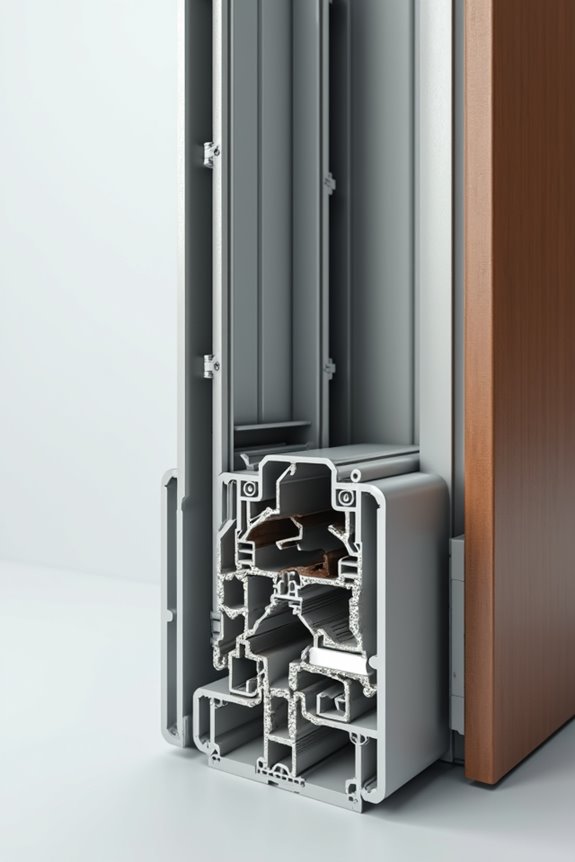
While selecting a door, it’s essential to evaluate durability and longevity, especially given the varying lifespans of different materials.
Material Comparison
- Steel Doors: Last 30 to 100 years; superior structural integrity; low maintenance; periodic rust inspections needed.
- Wooden Doors: Typically last 20 to 30 years; susceptible to warping and rot; regular upkeep required.
- Fiberglass Doors: Average lifespan of 15 to 20 years; resistant to rust; minimal maintenance demands enhance longevity.
- Sliding Glass Doors: Last 15 to 30 years; high-quality models can extend to 50-60 years with care.
Understanding these factors helps guarantee we select a door that meets our needs for lasting durability, allowing us to maintain our homes efficiently over time. Additionally, many homeowners opt for user-friendly processes that simplify maintenance and upkeep of their doors, ensuring they remain durable and functional for years to come.
Security Enhancements

Exploring durability inevitably leads us to contemplate security features in weatherproof doors, which play an essential role in safeguarding our homes. These doors utilize reinforced materials such as steel and aluminum frames, markedly enhancing resistance to forced entry.
Key aspects of these security enhancements include:
- Lock mechanisms: Multi-point locking systems secure multiple points simultaneously, improving protection compared to traditional locks.
- Impact-resistant frameworks: Laminated or tempered glass prevents shattering, complicating break-in attempts.
- Compliance: Many doors adhere to stringent building codes, validating resistance to extreme conditions and contributing to overall security.
Additionally, features like SmartKey Technology allow homeowners to easily rekey their locks, ensuring adaptability in security management.
With robust construction and advanced locking systems, weatherproof security doors not only defend against intrusions but also withstand environmental stressors, ensuring lasting safety for our living spaces.
Cost Savings

Investing in weatherproof doors can yield considerable financial advantages over time. While the upfront investment may range from $2,000 to $5,000 for typical replacements, the long-term savings justify this expense. By considerably reducing energy consumption by over 13% annually, these doors lower heating and cooling costs.
Factors contributing to savings include:
- Lower utility bills through reduced air infiltration, potentially saving up to $54 per year per door.
- Enhanced insulation decreasing the load on HVAC systems.
- IRS tax credits of up to $250 per door further offsetting initial costs.
Moreover, weatherproof doors tend to require less maintenance, bringing additional savings. Over the years, these factors combine to guarantee a solid return on investment, making them a wise choice for homeowners. Additionally, these doors often feature excellent insulation kits that further enhance energy efficiency.
Additional Lifestyle Advantages
As we consider the broader impact of weatherproof doors, we notice several lifestyle advantages that enhance everyday living. These doors notably improve indoor comfort by minimizing drafts and regulating temperature. The design aesthetics also shine through; they often feature interchangeable glass panels that let in natural light, creating bright and inviting entryways.
Furthermore, the enhanced sound insulation reduces outdoor noise, offering a peaceful retreat from bustling environments, which leads to overall lifestyle improvement. Seasonal ventilation options facilitate better indoor air quality without compromising security. Finally, with robust materials and UV filtration, our interior furnishings are protected, enhancing the durability and visual appeal of our homes. To conclude, weatherproof doors provide substantial benefits for our everyday lives, as they help significantly reduce heating costs during winter months through enhanced insulation.
Potential Drawbacks of Weatherproof Doors
While weatherproof doors offer significant advantages, we must also consider their potential drawbacks.
Material Limitations
Certain materials can limit our choices. For instance, wood doors often warp or crack when exposed to harsh elements. Steel doors are prone to dents, leading to rust if the protective coating is compromised. Fiberglass doors, while durable, can be pricier upfront. Another concern is fitting; some doors lack adjustability, complicating installation in existing frames.
Maintenance Challenges
Keeping these doors in good shape can also be demanding. For example, wood requires regular painting, leading to ongoing costs. Steel doors need touch-ups to prevent rust, and even fiberglass may require cleaning to maintain appearance. To summarize, understanding these drawbacks can help us make an informed choice.
Frequently Asked Questions
How Do I Choose the Right Weatherproof Door for My Home?
When we choose the right weatherproof door, we should consider energy efficiency and door materials. Let’s look for durable options like fiberglass or steel that’ll not only keep our homes cozy but also stylish.
What Are the Installation Requirements for Weatherproof Doors?
Ah, choosing the right weatherproof door’s like picking a trusty steed! For installation, we’ll need quality materials and proper door sizes. A solid frame, weather stripping, and diligent sealing guarantee our doors stand strong against the elements.
Are There Maintenance Tasks for Weatherproof Doors?
Absolutely, maintaining weatherproof doors involves regular inspections, seasonal upkeep, and cleaning. Let’s check weatherstripping, lubricate hinges, and schedule annual evaluations together. Keeping up with these tasks guarantees our doors stay efficient and secure for years.
Can Weatherproof Doors Be Customized for Different Styles?
Absolutely, weatherproof doors offer incredible customization options, showcasing style adaptability that lets us express our unique tastes. Whether modern or rustic, we can tailor every detail, creating an inviting entrance we’ll cherish.
What Is the Average Lifespan of Weatherproof Doors?
Weatherproof doors typically have lifecycle expectations of 20 to 80+ years, depending on material durability. We’ve found that steel and fiberglass perform well, while wood and sliding glass need more maintenance to reach their potential.