As an Amazon Associate, we earn from qualifying purchases. Some links on this site are affiliate links at no extra cost to you. Our recommendations are based on thorough research and editorial judgment.

What Is Window Sealing Techniques?

Window sealing techniques involve applying materials and methods to minimize air leaks around windows, enhancing energy efficiency. We commonly use silicone, polyurethane, or acrylic latex sealants, based on their properties. Key techniques include measuring gaps precisely, cleaning surfaces for better adhesion, and using weatherstripping. Effective air sealing also requires regular maintenance. Each type of caulk serves specific conditions, and understanding these options helps us make informed choices. We’ll explore these methods and materials further.
Key Takeaways
- Inspect windows for air leaks and clean surfaces before applying any sealing materials for a strong bond.
- Use appropriate sealants like silicone or polyurethane to ensure flexibility, durability, and waterproofing.
- Measure gaps accurately to determine the right type and amount of weatherstripping or caulk needed.
- Apply weatherstripping to edges and joints, using backer rods in larger gaps for improved caulk application.
- Regularly inspect and maintain sealing materials to ensure ongoing effectiveness against drafts and moisture.
Overview of Window Sealing Materials
You may be interested


When sealing windows, selecting the right material is essential for ensuring ideal performance and longevity. By reviewing sealant comparisons, we can see key differences.
Silicone Sealants
- Highly durable and flexible.
- Resistant to extreme temperatures and waterproof.
Polyurethane Sealants
- Strong adhesion and paintable for customization.
- Lower lifespan and longer cure time.
Acrylic Latex Sealants
- User-friendly and easy to clean.
- Less durable, prone to cracking.
Butyl Rubber Sealants
- Excellent for bonding different materials.
- Resilient but less common for general sealing.
Hybrid Sealants
- Combine features of silicone and polyurethane.
- Versatile, offering both durability and aesthetic options.
Understanding these materials can guide our choices for peak sealing durability, and weather sealing effectiveness can significantly enhance energy efficiency in homes.
Techniques for Effective Air Sealing

Effective air sealing is essential for enhancing energy efficiency and minimizing drafts in our homes. One effective method is DIY sealing, which involves applying weatherstripping or caulking. Weatherstripping works well on movable parts, while caulking fills small cracks around frames.
For best results, we should:
- Accurately measure gaps before applying materials.
- Clean surfaces to guarantee a strong bond.
- Consider using backer rods in larger gaps to improve caulk application. Weather seals like rubber weather stripping can significantly reduce air leakage.
Seasonal maintenance is key, so we should inspect our seals regularly, replacing any worn materials to maintain effectiveness. By combining various techniques and performing timely updates, we can truly optimize our window sealing efforts for maximum comfort and energy savings.
Types and Characteristics of Caulks for Window Sealing
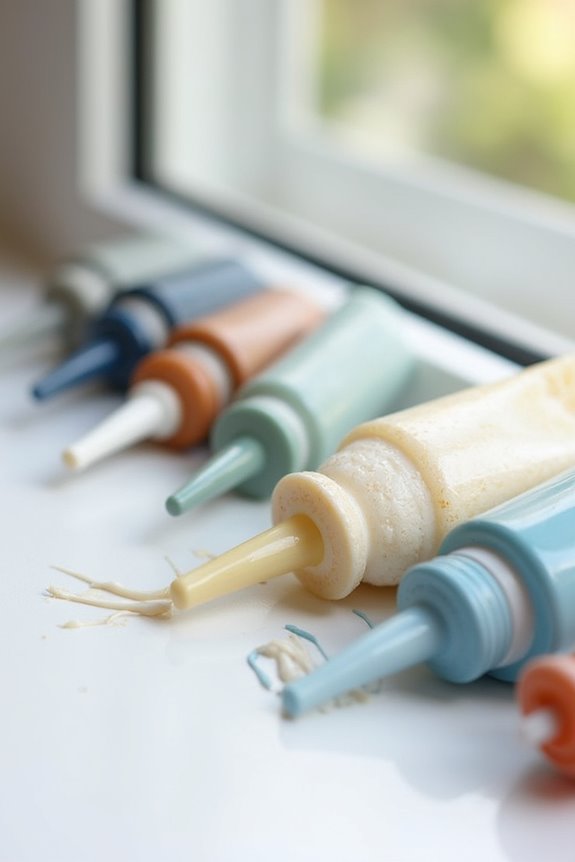
Understanding the different types of caulks available for window sealing is essential for achieving ideal results. We can choose from several options, each offering unique advantages and limitations.
- Silicone Caulk: Highly flexible, waterproof, and resistant to mold and mildew. Great for outdoor use and provides excellent adhesion.
- Latex Caulk: Easy to apply and paintable but less flexible, making it more prone to cracking.
- Polyurethane Caulk: Extremely durable with strong adhesion; it withstands UV exposure, ideal for exterior applications.
- Acrylic Latex with Silicone: Combines paintability with flexibility and moisture resistance.
In our caulk comparisons, we must consider factors like sealant longevity and specific conditions to find the best fit for our window sealing needs. Additionally, proper window screen installation can complement caulking efforts by enhancing overall air circulation and insect prevention.
Weatherstripping Varieties and Their Applications
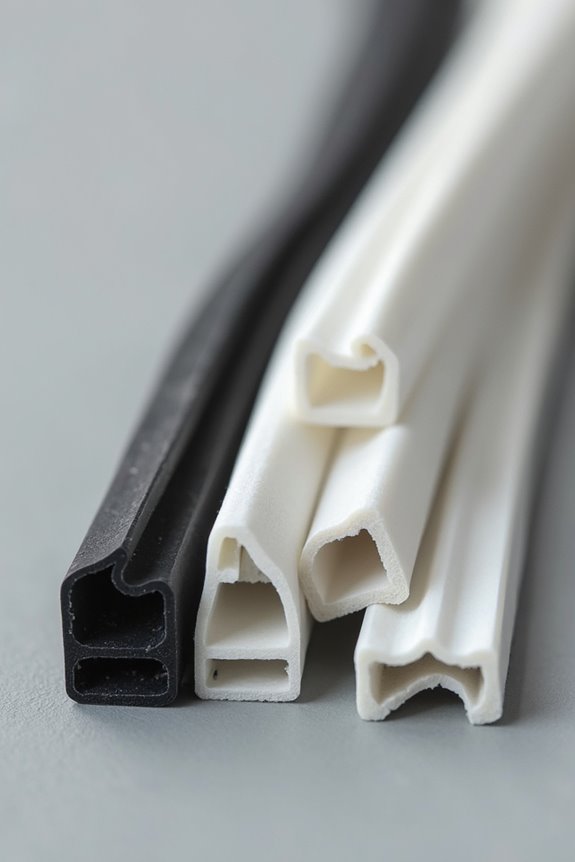
Weatherstripping plays an essential role in ensuring energy efficiency by sealing gaps around windows and doors. There are several types we can choose from, each with unique applications.
Adhesive Weatherstripping
- Offers benefits like easy installation.
- Flexible material fits irregular gaps but requires more frequent replacement.
Tubular Weatherstripping
- Known for its durability, perfect for larger gaps.
- Weather-resistant, it seals effectively against air, dust, and moisture.
Foam Weatherstripping
- Versatile but less durable than tubular options.
- Best for short- to medium-term needs in lower moisture areas.
V-Seal and Door Sweeps
- Excellent for sealing sides and bottoms.
- They enhance energy efficiency and maintain their shape over time. Additionally, using high-quality materials like silicone or foam can significantly improve insulation performance.
Step-by-Step Window Sealing Process

Sealing windows effectively involves a systematic approach to guarantee that gaps and cracks are properly addressed.
Inspection and Preparation
We begin by inspecting window edges for air leaks, removing old sealant with a putty knife, and thoroughly cleaning surfaces with water.
Weatherstripping and Insulation
Next, we accurately measure and apply weatherstripping to movable parts, followed by affixing window insulation film with double-sided tape. Proper sealing can also support energy efficiency improvements, leading to significant heating bill reductions.
Applying Sealant
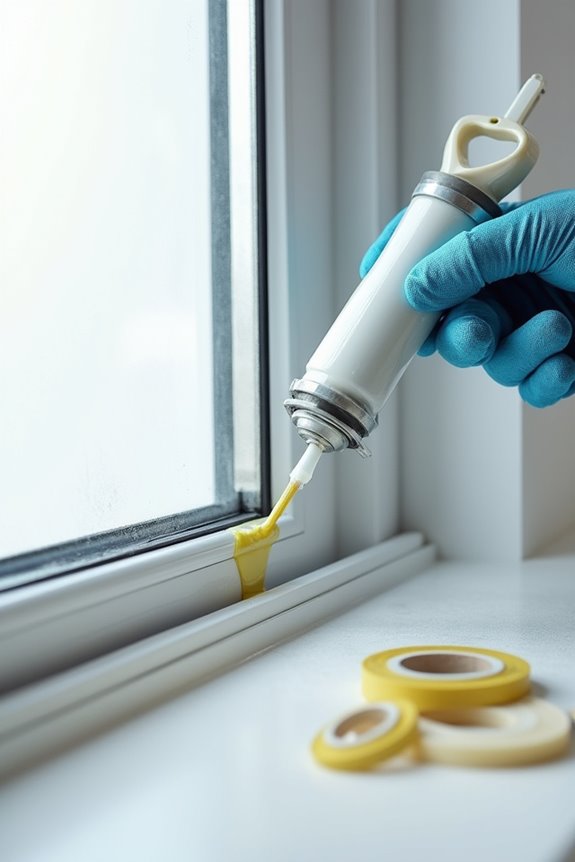
Using a caulking gun, we apply an even bead of sealant along joints. It’s essential to smooth the sealant before it skins over.
Finishing Touches
Finally, we remove painter’s tape and allow the sealant to cure. Regular maintenance is critical to enhance window sealing benefits and guarantee long-term efficiency.
Frequently Asked Questions
How Often Should Window Sealing Materials Be Replaced?
We should replace window sealing materials every 5 years, but if we notice significant material degradation or live in extreme climates, it may be wise to check for seal longevity and consider more frequent replacements.
Can I Use Leftover Caulk for Other Projects?
Absolutely, we can use leftover caulk in creative ways! Studies show we waste nearly 20% of crafting supplies. Proper caulk storage helps us transform that surplus into textured art, molds, or even noise-reducing solutions for our homes.
What Temperature Is Ideal for Applying Window Sealants?
For sealant application, we find ideal temperatures between 45°F and 80°F work best. This range guarantees good adhesion and performance, helping us achieve a long-lasting and reliable seal for our windows together.
How Does Window Sealing Improve Energy Efficiency?
Window sealing’s a game changer for energy savings, isn’t it? By reducing drafts, we enhance thermal comfort, keeping our homes cozy while lowering those pesky energy bills. Together, let’s embrace a more efficient, comfortable living space!
Are There Any DIY Alternatives to Commercial Sealing Products?
Absolutely, we can explore DIY alternatives! Homemade sealants like beeswax or eco-friendly options such as natural oils are great for sealing. They’re simple to make and perfect for a sustainable approach to window insulation. Let’s get started!