As an Amazon Associate, we earn from qualifying purchases. Some links on this site are affiliate links at no extra cost to you. Our recommendations are based on thorough research and editorial judgment.

Which Is Fiberglass Doors?

Fiberglass doors are composite structures made from glass fibers and resin, featuring an insulated foam core. They provide superior durability, with a resistance to warping, rotting, and insect damage. Typically ranging from R-values of 5 to 7, they offer significant energy efficiency and require minimal maintenance. Customization options include realistic wood grain finishes and various color stains. If you’re curious about their manufacturing process and applications, we can explore those further.
Key Takeaways
- Fiberglass doors are constructed from glass fibers and resin, featuring an insulated foam core for enhanced thermal and acoustic insulation.
- They offer exceptional durability, resisting warping, rotting, and insect damage, surpassing both steel and wood in impact resistance.
- Fiberglass doors provide excellent energy efficiency with R-values of 5 to 7, potentially lowering energy bills by up to 15%.
- Available in realistic wood grain textures and customizable finishes, fiberglass doors can enhance curb appeal while requiring minimal maintenance.
- Commonly used in residential and commercial applications, fiberglass doors are ideal for entryway solutions and renovations with design versatility.
Definition and Composition of Fiberglass Doors
You may be interested


Fiberglass doors, composed of glass fibers and resin, represent a modern blend of aesthetics and functionality. Their unique construction offers impressive performance features. The strong fiberglass skin is generally layered with two sheets, while the insulated foam core enhances thermal and acoustic insulation. These doors also feature impact-resistant glass, providing added safety and durability in severe conditions.
Key Benefits:
- Durability: Resistant to warping, rotting, and insect damage, fiberglass doors remain strong in various climates.
- Energy Efficiency: The insulation reduces heating and cooling costs, contributing to a more comfortable home environment.
- Aesthetic Appeal: These doors mimic wooden textures and grains, providing flexible customization options.
Manufacturing Process and Materials Used

To create high-quality fiberglass doors, we begin with the mold preparation, which involves selecting materials like wood, plastic, or metal based on the desired door specifications. We clean mold surfaces and apply a mold release agent to guarantee easy removal after curing.
Next, we focus on gelcoat application. This involves applying a 25 mil thick gelcoat layer, a pigmented fiberglass resin, to provide color and protection against UV rays and corrosion. This gelcoat can also be tailored for specialized uses like FDA compliance.
Once the gelcoat sets, we lay fiberglass fabric into the mold, saturating it with resin to ensure full adhesion, which strengthens the door. Our meticulous process guarantees durability and performance in diverse environments. It is essential to use high-quality materials to achieve cost-effective solutions that enhance the longevity of the product.
Durability and Weather Resistance Features

When comparing different door materials, one quickly realizes that fiberglass offers exceptional durability and weather resistance. Its impact resistance is significant; fiberglass doors withstand dents and damage better than both steel and wood, ensuring longevity.
Fiberglass doors are naturally weatherproofed against the elements. They resist warping, cracking, or rotting, even in extreme temperatures or high humidity, preserving their integrity over time. The sealed edges and weather-tight frames effectively prevent drafts, maintaining a controlled indoor climate.
Furthermore, moisture resistance inhibits swelling and mold growth, enhancing indoor air quality. UV resistance helps these doors retain their appearance, without fading or cracking under intense sunlight exposure. To conclude, fiberglass doors excel in durability and weather resistance, making them a wise investment for any homeowner. Additionally, their reliable energy efficiency ratings contribute to lower energy costs and improved indoor comfort.
Insulation and Energy Efficiency Benefits

Although homeowners often prioritize aesthetics, the insulation and energy efficiency of doors greatly impact comfort and utility costs. Fiberglass doors offer superior insulation performance, typically featuring R-values ranging from 5 to 7, which is considerably higher than wood doors, around 2 to 3. This difference translates to reduced heat transfer, minimizing energy consumption for heating and cooling.
Key benefits include:
- Lower Energy Bills: Fiberglass doors can provide energy savings of up to 15%.
- Stable Temperature: Their design prevents temperature fluctuations, enhancing indoor comfort.
- Weather-tight Seals: These barriers block drafts and maintain consistent indoor temperatures.
Incorporating fiberglass doors aligns with sustainable and eco-friendly practices, contributing to lower energy consumption over time. Additionally, energy-efficient windows work synergistically with fiberglass doors to enhance overall home insulation and reduce heating costs even further.
Aesthetics and Customization Options

While homeowners often consider the appearance of their entryways, the aesthetic appeal of fiberglass doors goes beyond mere visuals; it encompasses a variety of design elements that cater to diverse tastes.
Realistic Textures and Finishes
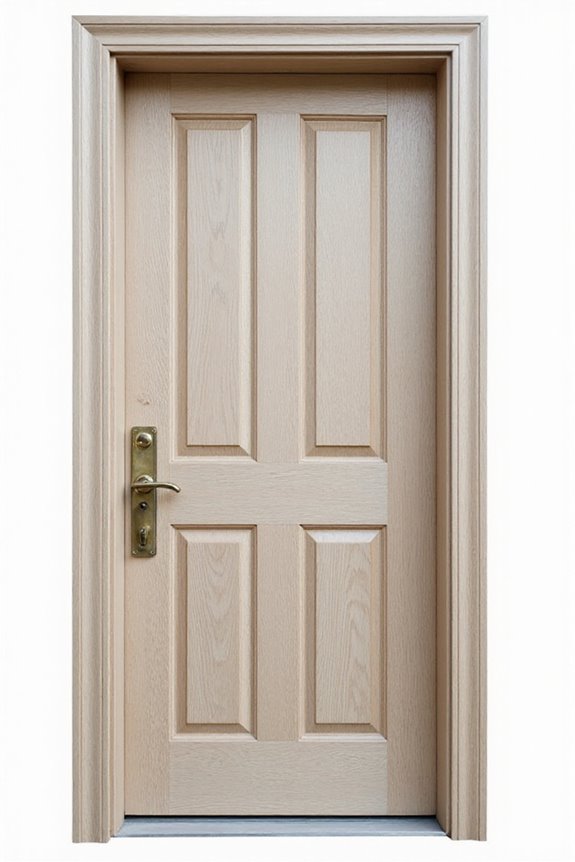
Fiberglass doors replicate authentic wood grains like oak and mahogany, providing a realistic look. They are available in both smooth and woodgrain textures, accommodating different design trends.
Customization and Color Options
Homeowners can choose from a broad palette of stains and paint options, allowing a personalized expression through color psychology. Our finish options maintain vibrancy longer than wood, requiring less upkeep. Additionally, fiberglass doors can be tailored for various architectural designs that enhance curb appeal and ensure a seamless integration with your home’s exterior.
Architectural Compatibility
Fiberglass doors come in styles compatible with various architectural designs, enhancing curb appeal while ensuring a seamless integration with your home’s exterior.
Maintenance Requirements and Care
To guarantee the longevity and appearance of fiberglass doors, regular maintenance is essential. Here are some care tips to keep in mind:
UV Topcoat
- Reapply the UV topcoat every 2–5 years.
- Avoid stripping the factory finish to preserve integrity.
Cleaning Routine
- Clean with mild soap and warm water every 3 months in harsh conditions.
- Rinse thoroughly and air dry to prevent damage.
Seal and Weatherstrip Maintenance****
- Inspect and replace worn weather stripping promptly.
- Re-caulk deteriorated areas to protect insulation.
Component Care
- Lubricate hinges regularly and check for corrosion.
- Replace damaged hardware to guarantee smooth function.
In addition, proper sealing helps maintain energy efficiency by preventing air leaks, contributing to the overall performance of your fiberglass doors.
Following this maintenance frequency will help extend the life and performance of your fiberglass doors.
Safety Features of Fiberglass Doors
Ensuring the safety and security of our homes involves understanding the features that fiberglass doors offer. These doors provide enhanced safety ratings due to their resistance to forced entry, being up to 30% more resilient than standard steel doors. Their reinforced frames and multi-point locking systems markedly improve security enhancements, securing the door at various points along the frame.
Moreover, fiberglass doors are crafted to resist denting and bowing, maintaining their integrity under environmental stressors. They also include fire-resistant cores, contributing additional safety. Reliable hardware options, such as Baldwin® locks, further bolster security, allowing customization tailored to our needs. Ultimately, these features create a strong, reliable choice for any home seeking security and durability.
Comparison to Traditional Wooden and Metal Doors
Fiberglass doors offer distinct advantages when compared to traditional wooden and metal doors.
Durability Comparison
In terms of durability, fiberglass doors resist rotting and warping better than wood doors, which require upkeep to prevent deterioration. While steel doors provide strength, fiberglass offers an excellent balance of durability without the need for regular maintenance.
Aesthetic Preferences
Regarding aesthetics, wooden doors deliver a natural warmth and unique grain pattern that can’t be precisely mimicked. On the other hand, fiberglass can replicate wood grain, though the pattern may be repetitive.
Ultimately, those looking for low-maintenance, long-lasting options frequently gravitate toward fiberglass doors, while others may lean toward the classic look of wood or the robust nature of metal doors.
Cost-Effectiveness and Value Proposition
When evaluating cost-effectiveness and the value proposition of fiberglass doors, we find that their initial expense often justifies the long-term savings.
Cost Comparison
Fiberglass doors typically range from $1,500 to $2,500. While this may seem steep compared to steel doors at about $1,000, the durability is unparalleled.
Long-Term Benefits
Their minimal maintenance needs, such as simple soap and water cleaning, contribute to overall savings. Additionally, the foam core insulation improves energy efficiency, potentially lowering energy bills by 18-24%.
In essence, despite higher upfront costs, fiberglass doors often prove cost-effective over time due to reduced repairs, replacements, and energy expenses. Choosing fiberglass means investing in durability and longevity, making them a smart choice for homeowners.
Environmental Impact and Sustainability
As we consider the environmental implications of fiberglass doors, we recognize a blend of benefits and challenges.
Environmental Footprint
Fiberglass doors emit approximately 84.91 kg of CO2 equivalent per square meter during production, showcasing moderate carbon emissions compared to traditional materials. While fiberglass is less carbon-intensive than steel, it still faces sustainability challenges due to limited recycling options.
Resource Usage
The production process is energy-intensive, relying on resins and glass fibers. Although fiberglass helps reduce deforestation, its synthetic nature raises concerns.
Energy Efficiency
On a positive note, fiberglass doors provide excellent thermal insulation, which lowers heating and cooling energy use, indirectly minimizing carbon emissions over time.
Balancing these factors allows us to make informed choices regarding our environmental impact.
Installation Process and Considerations
Installing fiberglass doors requires careful preparation and precise execution to guarantee a proper fit and ideal performance.
Preparing the Rough Opening
We must confirm the rough opening is about ¾ inch wider and ½ inch taller than the door frame. Check for plumb, level, and square, adjusting any deviations. A clean, dry, and smooth subfloor is essential for structural integrity.
Sealing and Positioning
Apply sealants to prevent water infiltration and use waterproofing membranes around the perimeter. We should work together: one person inside with shims, the other outside to lift the door into place, centering it with ¾ inch clearance on each side.
Leveling and Securing
Verify levels with a 4-foot level and shim as necessary, then securely fasten the frame to the rough opening using corrosion-resistant fasteners.
Popular Applications and Use Cases
Fiberglass doors offer a range of applications due to their combination of durability, energy efficiency, and aesthetic flexibility.
Residential Use
In homes, they’re popular for entryways and back doors, showing resilience against weather and insects. Their wood-like look fits current design trends, while their foam cores enhance energy efficiency.
Commercial Applications
For businesses, fiberglass doors provide stylish, low-maintenance solutions, able to endure heavy use while resisting environmental damage.
Renovation Projects
Homeowners often choose them for upgrades, avoiding installation challenges linked to traditional materials.
Custom Options
We can even customize these doors with additional features like glass inserts for both beauty and security, making them versatile for various needs.
Frequently Asked Questions
Are Fiberglass Doors Environmentally Friendly?
Yes, fiberglass doors can be environmentally friendly. Their energy efficiency helps lower energy consumption, while innovations are improving recycling potential. Together, we can embrace these sustainable options for our homes while prioritizing the planet’s health.
How Long Do Fiberglass Doors Last?
Fiberglass doors can last 30 to 50 years! By focusing on durability factors and following simple maintenance tips, we can enjoy their beauty and efficiency for decades, minimizing repairs and worrying about replacement costs.
Can Fiberglass Doors Be Easily Repaired?
Yes, we can easily repair fiberglass doors using effective repair techniques. With a little effort, proper maintenance tips, and a few materials, we can restore their beauty and strength, ensuring they last for years to come.
Do Fiberglass Doors Come With a Warranty?
Absolutely, fiberglass doors come with extensive warranty details. Typically, they cover defects for a lifetime, provided we follow the installation process diligently. Isn’t it reassuring to have such security for our door investments?
How Do I Choose the Right Fiberglass Door Style?
To choose the right fiberglass door style, let’s explore various door designs together. We can consider our home’s aesthetics, from traditional to modern style options, ensuring we find the perfect fit that reflects our unique taste.